


Belur Chennakeshava Temple
King Vishnuvardhana's Vishnu temple on the Yagachi River, built over three generations in the old Hoysala capital
Belur, Hassan, Karnataka

Open daily · 7:30 AM to 7:30 PM
- Darshan
- -
- Dress code
- Wear modest clothing. Footwear must be removed before entering the temple.
- Best season
- -
About the temple
The Chennakeshava Temple, also known as the Keshava or Vijayanarayana Temple, is a Vishnu temple in Belur, in Karnataka's Hassan district. It stands on the banks of the Yagachi River in a town that was once an early capital of the Hoysala kings, who held it in such regard that it was called an earthly Vaikuntha, the abode of Vishnu. King Vishnuvardhana commissioned the temple in 1117 CE, and the work went on for 103 years across three generations. Over the centuries it was plundered during wars and repaired again and again. Unlike its sister Hoysala temples at Halebidu and Somanathapura, Belur has never stopped being a place of worship, and daily rituals and festivals continue here. The Archaeological Survey of India protects the monument, while worship is managed by Karnataka's Hindu Religious Institutions and Charitable Endowments Department.
Significance
Belur's Chennakeshava Temple is counted among the high points of Hoysala art, admired for its richly detailed soapstone sculptures. Built by Vishnuvardhana, it reflects his deep devotion to the Sri Vaishnava tradition of Ramanujacharya and is regarded as his greatest work. In 2023 it was inscribed as a UNESCO World Heritage Site, part of the Sacred Ensembles of the Hoysalas along with the temples at Halebidu and Somanathapura. It is the only one of the three still in active worship.
History
- 11110 CE · Vishnuvardhana takes the throne
The Hoysala king who would build the temple comes to power.
- 21117 CE · Temple consecrated
The main shrine is consecrated; the complex grows over 103 years across three generations.
- 3Early 14th century · Sultanate raids
Malik Kafur's forces plunder the Hoysala lands; Belur is raided again in 1326 CE.
- 41381–1397 · Vijayanagara additions
Granite pillars, a gold-plated kalasa and a seven-storey brick gopuram are added.
- 51935 · Restoration
Restoration work funded by the Mysore government and Wadiyar grants.
- 62023 · UNESCO World Heritage
Inscribed as part of the Sacred Ensembles of the Hoysalas.
Architecture
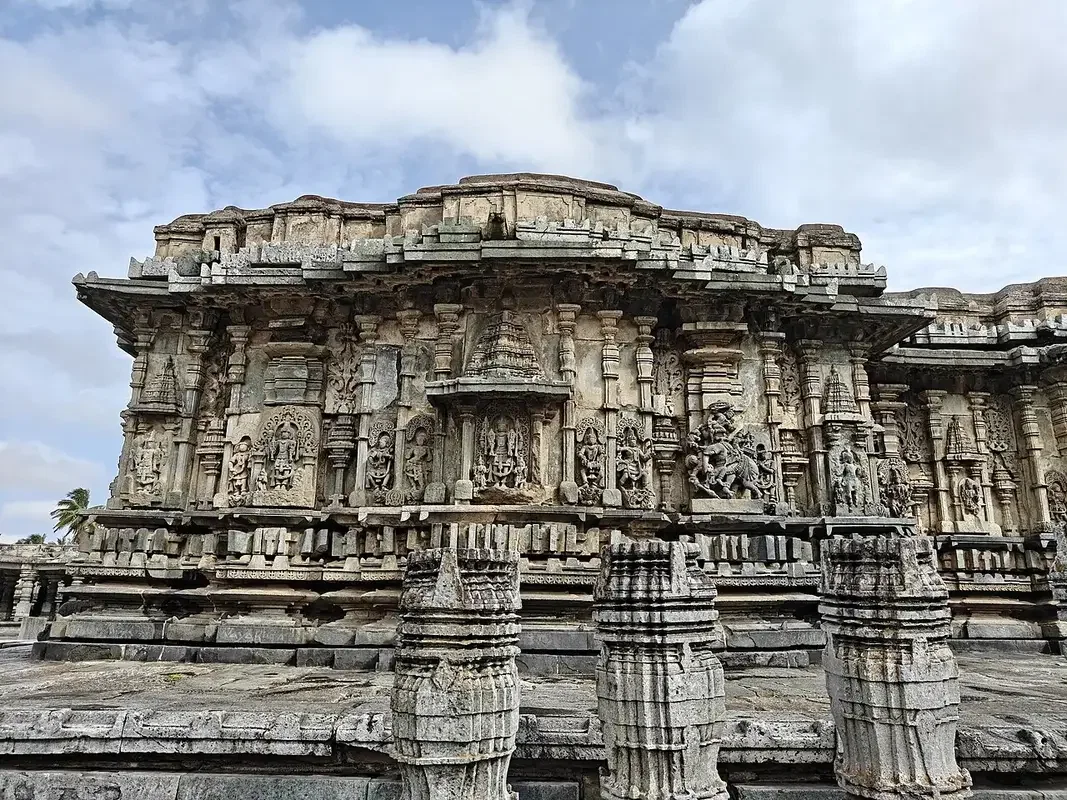
The temple stands on a raised platform (jagati) with a star-shaped vimana, and is known for its intricate soapstone carving. Its tower was damaged and rebuilt many times, and after 19th-century restoration work the shrine was left without one. Scholar Foekema holds that the lost tower was of the curved Bhumija type, a North Indian form still seen on the miniature shrines at the hall entrance and rare in Dravidian temples.
Daily seva timings
Indicative — confirm on the temple's official site before visiting
Indicative — confirm on the temple's official site before visiting
Offerings & festivals
-
A two-day chariot festival, the temple's main annual celebration.
Observed at the temple.
Observed at the temple.
Observed at the temple.
How to reach
There is no airport near Belur.
Hassan is the nearest railway city, about 35 km from the temple.
Belur is about 220 km from Bengaluru via NH75, 35 km from Hassan and 16 km from Halebidu.
-
Frequently asked questionsFAQs
The temple is open daily from 7:30 AM to 7:30 PM.
More temples in KarnatakaMore in Karnataka
View all →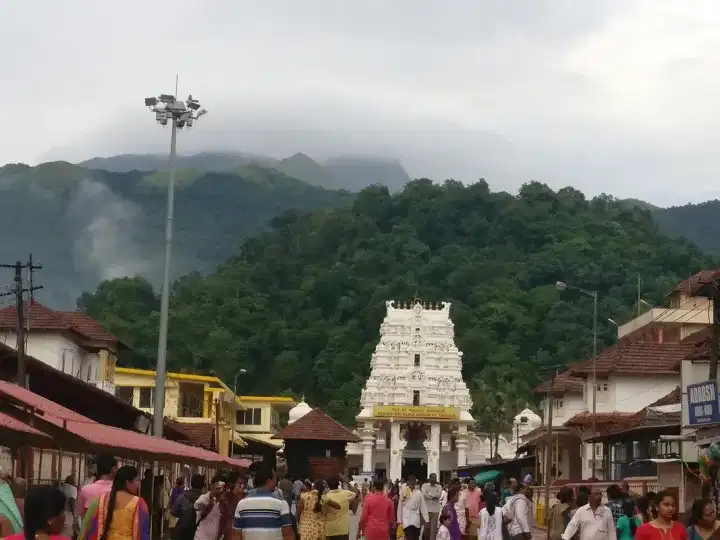
Kukke Sri Subrahmanya Temple
Subrahmanya, KarnatakaSubrahmanya
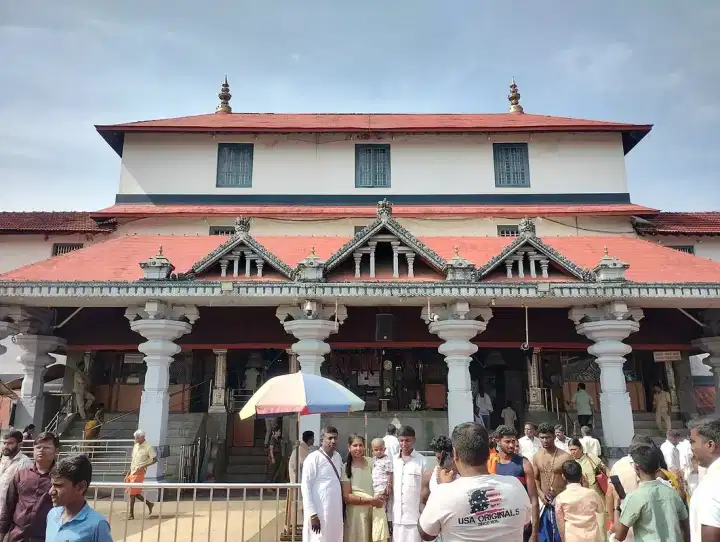
Dharmasthala Sri Manjunatha Temple
Dharmasthala, KarnatakaDharmasthala
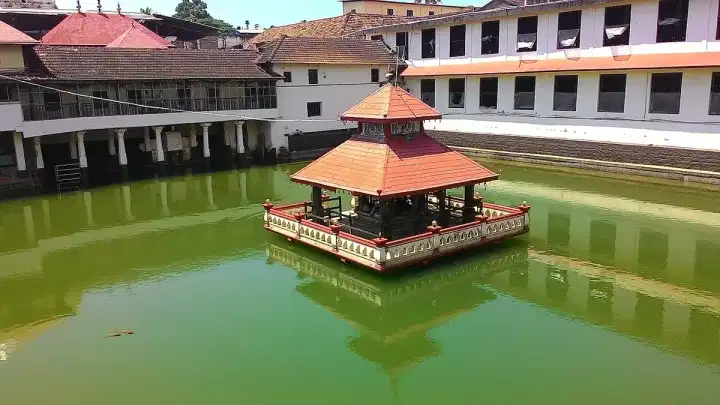
Udupi Sri Krishna Matha
Udupi, KarnatakaUdupi
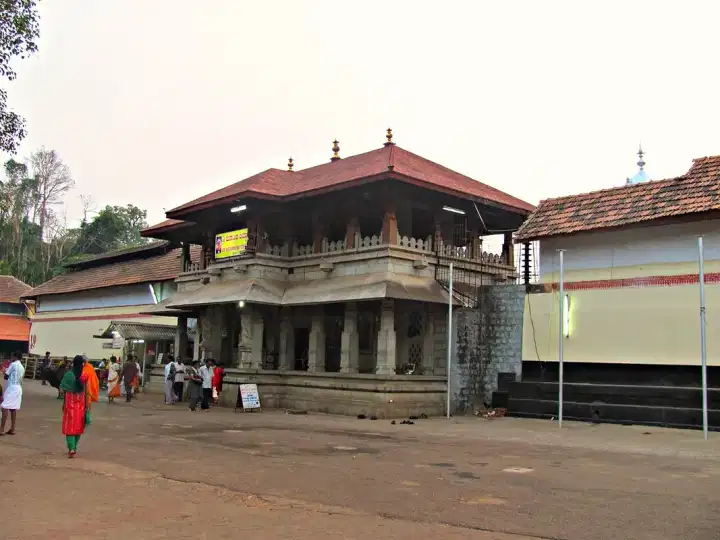
Kollur Sri Mookambika Temple
Kollur, KarnatakaKollur
Recommended Pujas
View all pujas →View allThis information is for awareness only. This temple is not a Vedamandir partner temple.