


Dakshineswar Kali Temple
Maa Bhavatarini's nine-spired shrine on the Hooghly, home of Sri Ramakrishna's devotion
Dakshineswar, North 24 Parganas, West Bengal

Darshan 06:30–12:30 & 15:30–19:30 · Mangal Aarti at 04:00
- General darshan
- -
- Dress code
- Wear modest, traditional clothes with shoulders and knees covered (dhoti or trousers-shirt for men, saree or salwar kameez for women). Remove footwear; leather items and large bags are not allowed near the sanctum.
- Best season
- -
About the temple
Dakshineswar Kali Temple stands on the eastern bank of the Hooghly River at Dakshineswar, in Kolkata. Its presiding goddess is Maa Bhavatarini, a form of Kali, shown standing on the chest of a reclining Shiva upon a silver lotus throne of a thousand petals. Rani Rashmoni, a zamindar of the Janbazar Raj and a devoted follower of Kali, built the temple, and the goddess was installed in 1855. Besides the main nine-spired shrine, the riverside complex holds a row of twelve Shiva temples and the Radha Kanta temple of Krishna and Radha. The temple is closely tied to Sri Ramakrishna, who served here as head priest, and to his wife Sarada Devi, whose small room in the Nahabat is now a shrine in her honour. A Board of Trustees descended from Rani Rashmoni's family looks after the temple today.
Significance
For devotees, Dakshineswar is the place where Sri Ramakrishna poured out his love for the Divine Mother as Kali. His devotion and his simple, practical teachings for householders brought fame and pilgrims to the temple, and seekers such as Swami Vivekananda came to him here. Rani Rashmoni is remembered for opening the temple to devotees of every caste and faith, a bold step in her time. Part of the temple stands on tortoise-shaped ground, which Tantra tradition holds fitting for the worship of Shakti.
History
- 11847 · Land bought at Dakshineswar
After a dream of the Divine Mother, Rani Rashmoni gave up a Kashi pilgrimage and bought land by the Ganges.
- 21847–1855 · Temple complex built
Construction took eight years and nine hundred thousand rupees.
- 331 May 1855 · Goddess installed
The image of Kali was installed on Snana Yatra day, with Ramkumar Chhattopadhyay as head priest.
- 41856 · Ramakrishna becomes head priest
After his elder brother Ramkumar died, Gadadhar, later Sri Ramakrishna, took over as head priest.
- 51902–1932 · The Kathamrita published
Mahendranath Gupta published Sri Ramakrishna's teachings, known in English as The Gospel of Sri Ramakrishna.
Architecture
The main temple follows the Bengal navaratna style, with nine spires spread across its upper two storeys. Three storeys tall and facing south, it rises on a high platform reached by a flight of steps, measuring 14 metres square and over 30 metres in height. In the sanctum, Bhavatarini stands on Shiva atop a silver thousand-petalled lotus. Between the temple and the river ghat lie twelve matching east-facing Shiva shrines in aat-chala style, while the Radha Kanta temple to the northeast holds silver-throned images of Krishna and Radha.
Daily seva timings
As published on the temple's official site
As published on the temple's official site
Offerings & festivals
Held on the Kartika new moon; the temple's grandest festival, drawing very large crowds.
Kali worship on the new moon of Jyeshtha.
Observed on Magha Krishna Chaturdashi.
Marks the anniversary of the goddess's installation in 1855.
How to reach
-
The Dakshineswar and Dum Dum area is well connected by the Kolkata Metro.
Near Dunlop junction; reachable from Howrah via the BT Road and Vivekananda Road corridor, 13–19 km. Ferries also run from Belur Math.
-
Frequently asked questionsFAQs
Morning puja and darshan run from 06:30 to 12:30 and evening darshan from 15:30 to 19:30. Mangal Aarti is at 04:00 and Sandhya Aarti at 18:30.
More temples in West BengalMore in West Bengal
View all →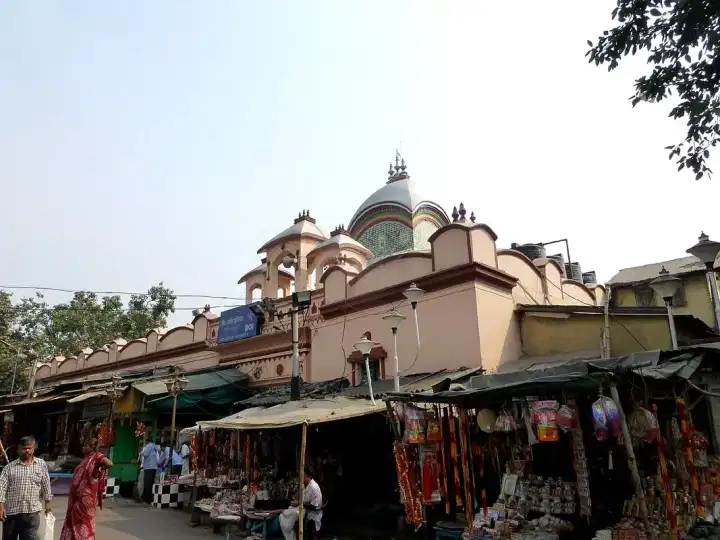
Kalighat Kali Temple
Kalighat, West BengalKalighat
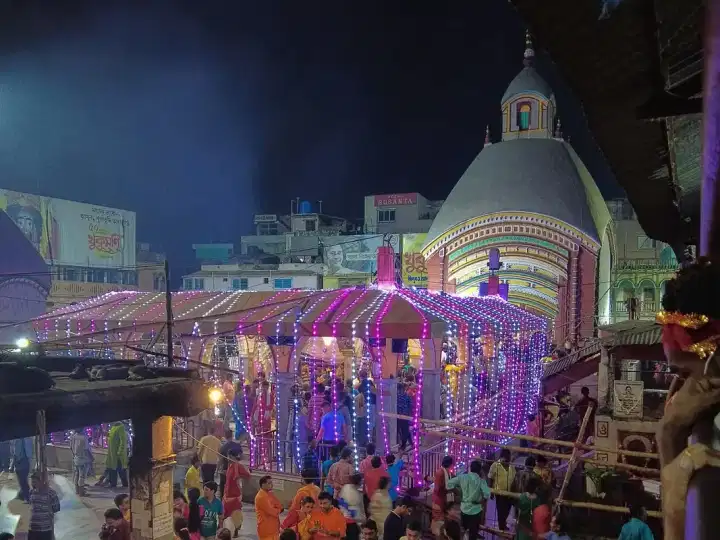
Tarapith Temple
Tarapith, West BengalTarapith
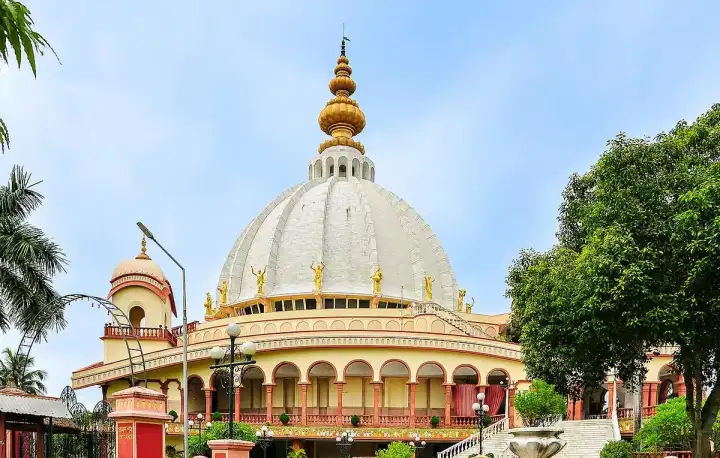
ISKCON Sri Mayapur Chandrodaya Mandir
Mayapur, West BengalMayapur
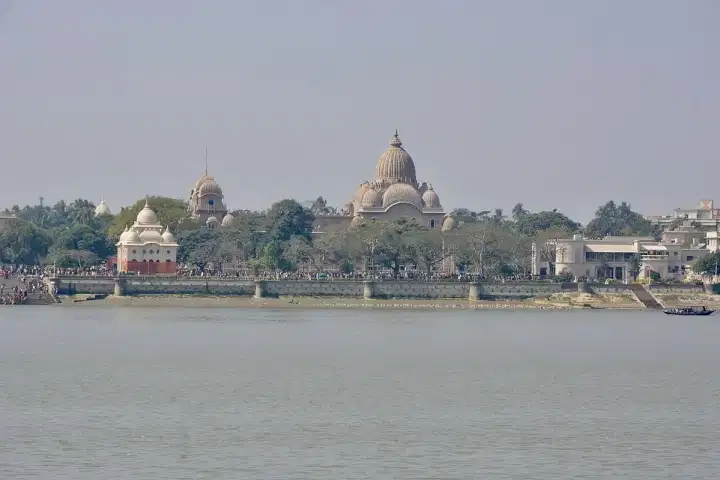
Belur Math
Belur, West BengalBelur
Recommended Pujas
View all pujas →View allThis information is for awareness only. This temple is not a Vedamandir partner temple.