


Guruvayur Sri Krishna Temple
Darshan of the four-armed Guruvayurappan in Kerala's temple town, from the 3 AM sanctum opening to the night.
Guruvayur, Thrissur, Kerala

Sanctum opens 03:00 · several darshan windows until 21:00
- Advance (paid) Darshan - per person above 10 years
- ₹1,000
- Advance (paid) Darshan - group of 5
- ₹4,500
- Dress code
- Men: dhoti with angavastram (upper cloth). Women: saree, churidar or half-saree.
- Best season
- -
About the temple
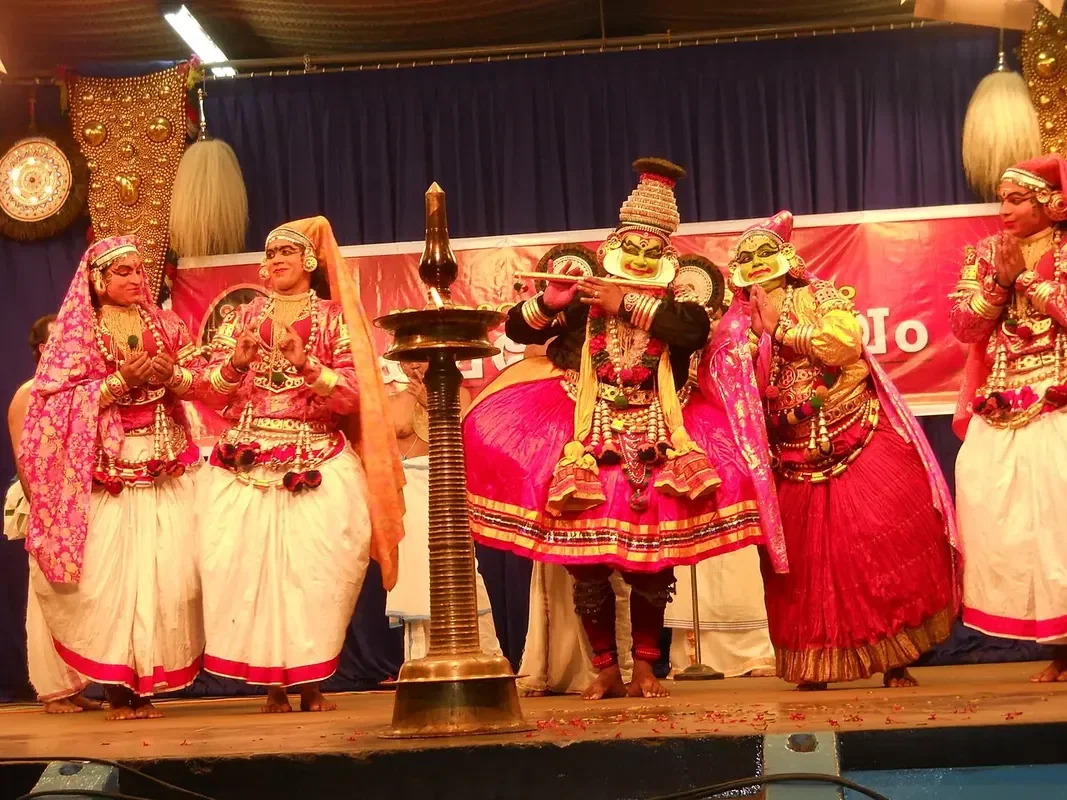
The Guruvayur Sree Krishna Temple stands in the town of Guruvayur in Thrissur district, Kerala, 26 km northwest of Thrissur city. It is the home of Guruvayurappan, a form of Krishna-Vishnu, and is counted among the 108 Abhimana Kshethrams of the Sri Vaishnava tradition. Devotees call it Bhuloka Vaikuntham, Vishnu's abode on earth. The temple's story tells of an idol first worshipped in Dwaraka and later carried south by Guru (Brihaspati) and Vayu, which gave the town its name. The temple is run by the Guruvayur Devaswom Board and is also a traditional centre for Carnatic music and classical dance offered to the Lord.
Significance
Guruvayur is one of the most important Krishna pilgrimage centres in India. Tradition holds that the idol was shaped by Vishnu himself, worshipped by Krishna's parents across lifetimes, and installed here by Guru and Vayu at a spot chosen by Shiva, who then moved to the nearby Mammiyoor Temple. The shrine is also linked with healing: King Janamejaya is believed to have been cured of leprosy after worshipping Krishna here on the advice of sage Dattatreya.
History
- 114th century · Named in Kokasandesam
The Tamil text Kokasandesam refers to the place as Kuruvayur.
- 216th century · Rise as a pilgrimage centre
The era of the Narayaneeyam's author Melpathur Narayana Bhattathiri; Guruvayur became a leading pilgrimage centre in Kerala.
- 31716 · Dutch raid
Treasures were looted and the western gopuram was burnt; it was rebuilt in 1747.
- 41789–1792 · Idol sheltered at Ambalappuzha
During Tipu Sultan's invasion the idol was secretly moved, then reinstalled on 17 September 1792.
- 51947 · Opened to all Hindus
After the Guruvayur Satyagraha, the temple opened to all Hindus on 2 June 1947.
- 61970 · Great fire
A fire on 30 November 1970 damaged the Chuttambalam and Vilakkumatam; the sanctum and main idol were spared.
Architecture
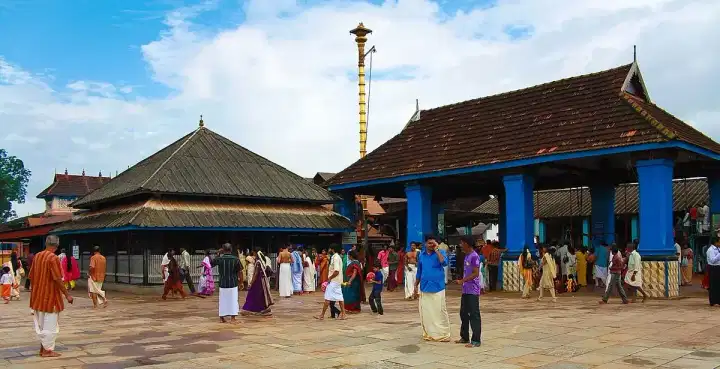
The temple follows the Kerala style, with sloping copper roofs, wood and laterite, and faces east. The two-storeyed rectangular Srikovil has a gold-plated copper roof and mural-covered walls, restored in the 1980s after the 1970 fire. The standing four-armed Guruvayurappan, carved from shaligram stone, holds the conch, discus, mace and lotus. Around it are the Nalambalam, the Chuttambalam with its lamp house, a gold-plated lamp pillar and flagmast, and the Rudratheertham tank to the north.
Daily seva timings
As published on the temple's official site
As published on the temple's official site
Offerings & festivals
Ten-day festival in Kumbham, starting with the flag hoisting on Pooyam star
The bright-fortnight Ekadasi of Vrischikam, the temple's famous Ekadasi
Krishna's birthday, celebrated in the month of Chingam
First day of Medam, once a harvest festival, with Vishu Kani darshan
How to reach
Cochin International Airport is 80 km away; Calicut International Airport is 100 km away.
Guruvayur railway station is 1 km from the temple; Thrissur is the main junction nearby.
Guruvayur lies 26 km northwest of Thrissur, with KSRTC and private buses from major Kerala towns.
-
Frequently asked questionsFAQs
Yes. Free darshan is available through online booking, with monthly slots released on the Devaswom website. Paid advance darshan costs ₹1,000 per person above 10 years, or ₹4,500 for a group of 5.
More temples in KeralaMore in Kerala
View all →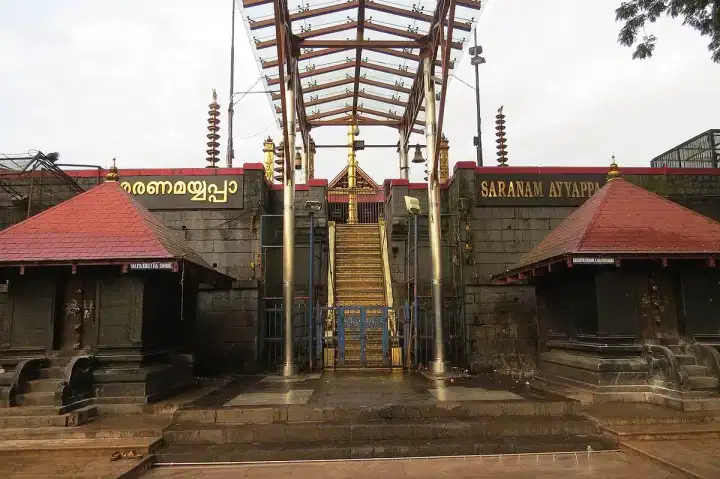
Sabarimala Sree Dharma Sastha Temple
Sabarimala, KeralaSabarimala
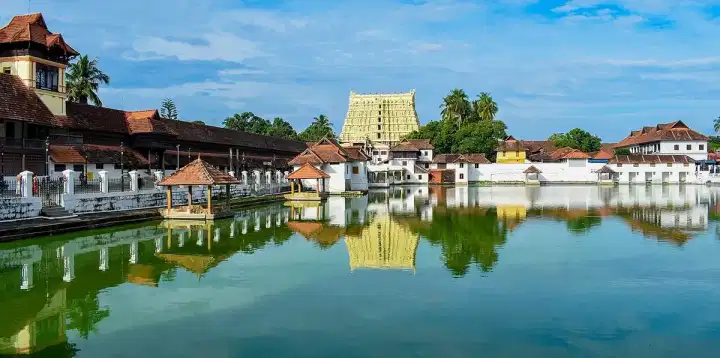
Sree Padmanabhaswamy Temple
Thiruvananthapuram, KeralaThiruvananthapuram
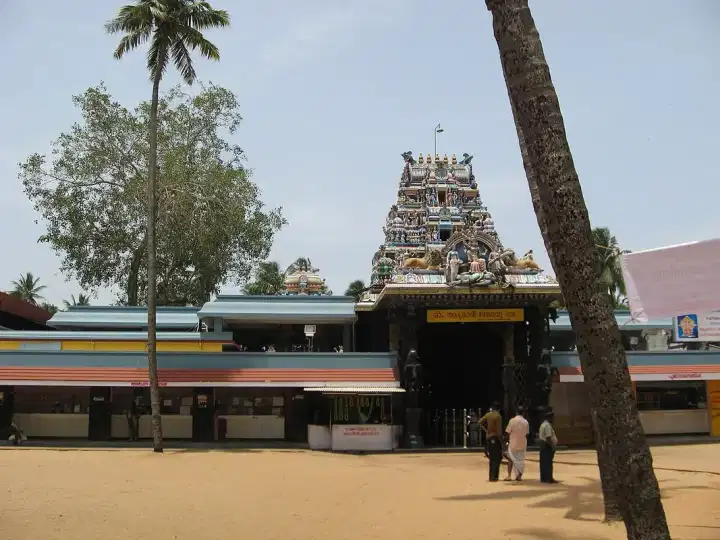
Attukal Bhagavathy Temple
Attukal, KeralaAttukal
Chottanikkara Bhagavathy Temple
Chottanikkara, KeralaChottanikkara
Recommended Pujas
View all pujas →View allThis information is for awareness only. This temple is not a Vedamandir partner temple.