


Hoysaleswara Temple, Halebidu
Twin Shiva shrines of the Hoysala capital, carved in soapstone and part of a UNESCO World Heritage Site
Halebidu, Hassan, Karnataka

-
- Darshan
- -
- Dress code
- No strict dress code is enforced, but covering most of the body is advised. Women may wear a saree or salwar kameez, men a panche or trousers. Remove footwear before entering.
- Best season
- October – February
About the temple
The Hoysaleswara Temple, often simply called the Halebidu temple, is a 12th-century temple to Lord Shiva in Halebidu, Hassan district, Karnataka. It is the largest monument in the town, which was once Dorasamudra, the capital of the Hoysala Empire. The temple stands beside a large man-made lake and was raised under King Vishnuvardhana. Work began around 1121 CE and finished in 1160 CE. It has two shrines side by side, holding the Hoysaleswara and Shantaleswara lingas. It is the largest Hoysala temple to Shiva in South India. Its walls are covered in detailed friezes and bracket figures, and its pillars were turned on a lathe. Today the Archaeological Survey of India protects it as a monument of national importance. Since 2023 it has been part of UNESCO's 'Sacred Ensembles of the Hoysalas' World Heritage Site, together with the Chennakeshava temple at Belur.
Significance
This is the largest temple the Hoysala kings built for Lord Shiva in South India. Its twin sanctums hold two lingas, Hoysaleswara and Shantaleswara, under one roof. Scholars and visitors see it as the high point of Hoysala sculpture, with long carved friezes, graceful bracket figures and lathe-turned pillars. It stood at the heart of Dorasamudra, a royal capital of Hindu and Jain temples, stepwells and halls. In 2023 UNESCO named it, with Belur's Chennakeshava temple, part of the 'Sacred Ensembles of the Hoysalas'.
History
- 1c. 1121 CE · Construction begins
Built under King Vishnuvardhana; an inscription credits his officer Ketamalla and records land grants for the temple.
- 21160 CE · Temple completed
The twin Shiva shrines of Hoysaleswara and Shantaleswara were finished in soapstone.
- 3Early 14th century · Capital plundered
Delhi Sultanate armies of Alauddin Khalji raided Dorasamudra; Muhammad bin Tughlaq's army struck again in 1326 CE.
- 4Mid-14th century · Capital abandoned
The Hoysala kingdom ended, the region passed to Vijayanagara, and the site became known as Halebidu, 'old capital'.
- 51850s · First photographed
Among the earliest surveyed and photographed ruins; later repairs reused panels from other temples.
- 62023 · UNESCO listing
Inscribed in the 'Sacred Ensembles of the Hoysalas' World Heritage Site.
Architecture
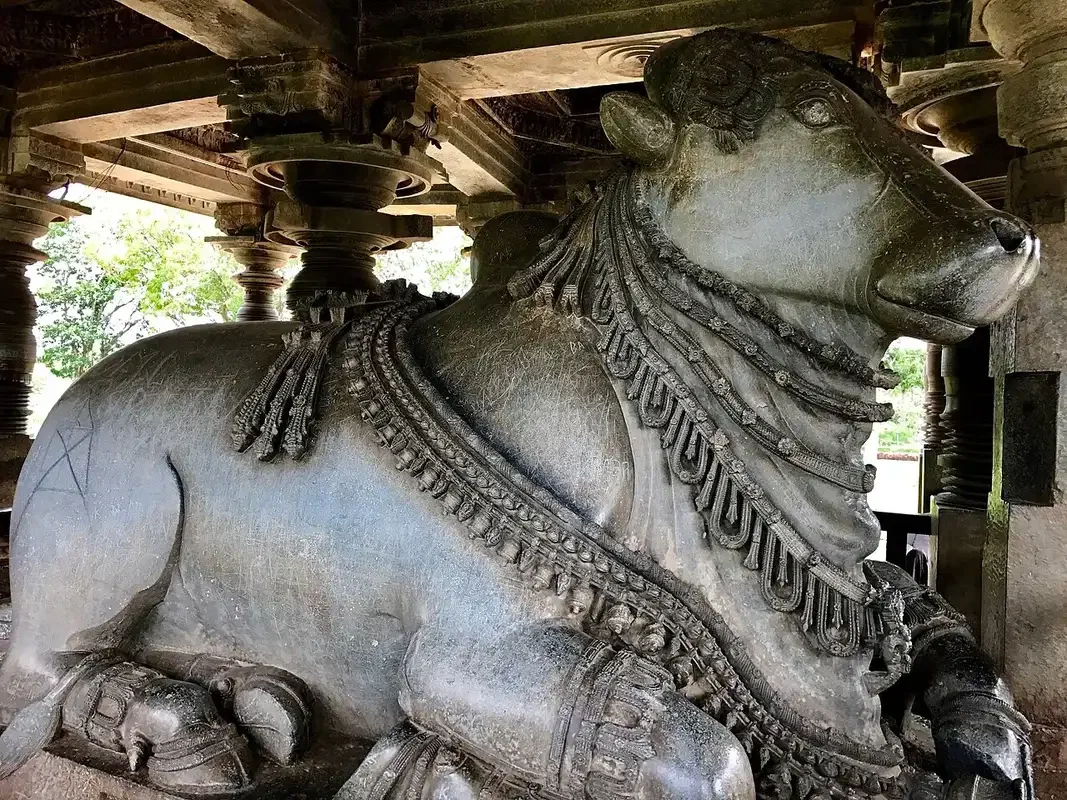
The temple follows the Hoysala style and is carved from soapstone. Two shrines stand side by side, one for each linga. The outer walls carry rows of detailed friezes, with bracket figures and pillars shaped on a lathe. The original shikhara towers above the sanctums are lost, so the temple now looks flat-roofed. Restoration work in the colonial era reused carved panels from other ruined temples, including on the Nandi mandapa and the plinth.
Daily seva timings
-
-
Offerings & festivals
-
-
How to reach
Kempegowda International Airport, Bengaluru (BLR), is the nearest major airport, a road journey of around four hours.
Hassan is the nearest railway station; taxis and buses run on to Halebidu.
Halebidu is 30 km northwest of Hassan and 16 km from Belur by road.
-
Frequently asked questionsFAQs
There is no strict dress code, but covering most of the body is advised. Women may wear a saree or salwar kameez, men a panche or trousers. Footwear must be removed before entering.
More temples in KarnatakaMore in Karnataka
View all →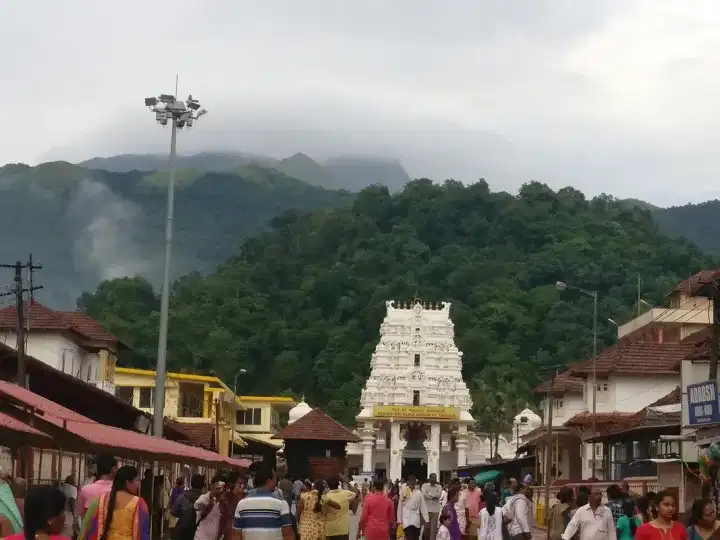
Kukke Sri Subrahmanya Temple
Subrahmanya, KarnatakaSubrahmanya
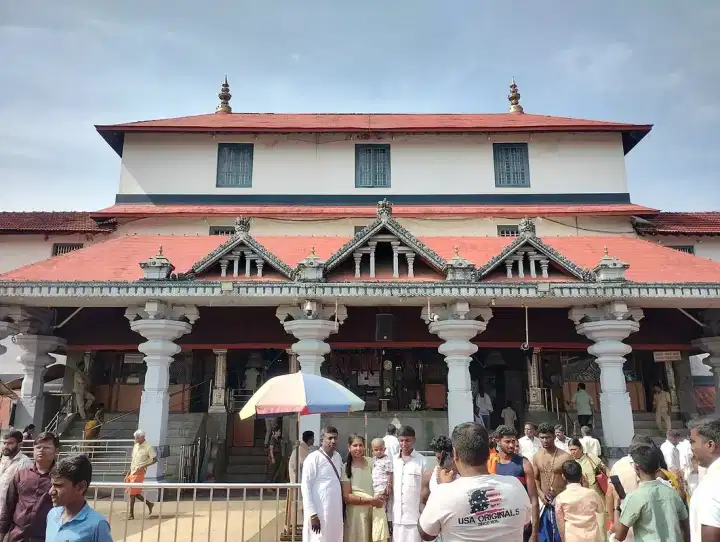
Dharmasthala Sri Manjunatha Temple
Dharmasthala, KarnatakaDharmasthala
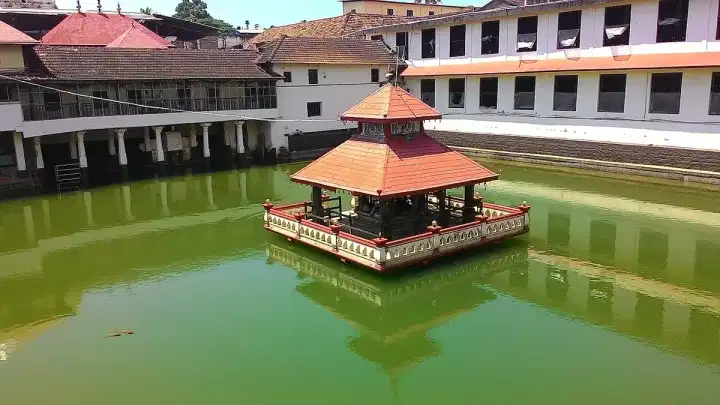
Udupi Sri Krishna Matha
Udupi, KarnatakaUdupi
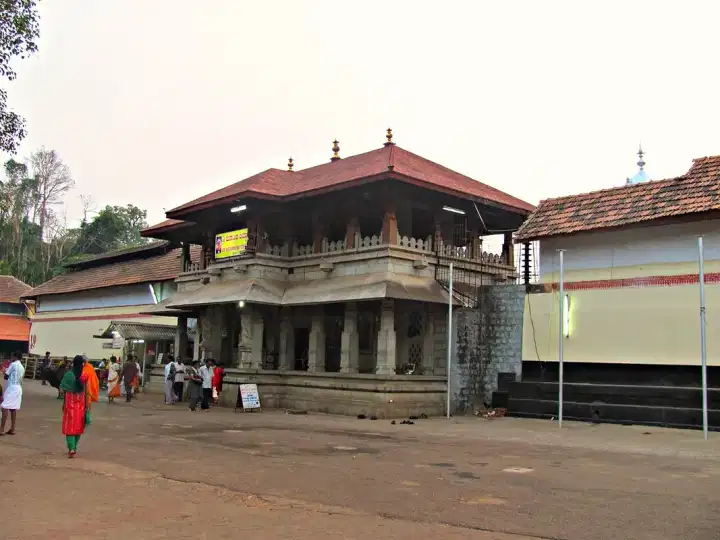
Kollur Sri Mookambika Temple
Kollur, KarnatakaKollur
Recommended Pujas
View all pujas →View allThis information is for awareness only. This temple is not a Vedamandir partner temple.