


Jwala Ji Temple, Jawalamukhi
Shakti Peeth of the eternal flame in Jawalamukhi, Kangra, where the Goddess is worshipped as fire from the rock
Jawalamukhi, Kangra, Himachal Pradesh

Open 05:00–22:00 · Mangal Aarti to Shaiyan Aarti
- Darshan
- -
- Dress code
- -
- Best season
- March – June
About the temple
Jwala Ji Temple stands in the town of Jawalamukhi in Kangra district, Himachal Pradesh, and is dedicated to Goddess Jwala Devi. The main shrine is built over a crack in the rock from which flames rise without end, and these flames are worshipped as the Goddess herself. There is no idol in the sanctum. The temple is one of the major Shakti Peeths and draws large crowds, especially during the two Navratri fairs held every year. Local tradition credits Raja Bhumi Chand of the Katoch dynasty of Kangra with discovering the site after a dream and starting worship here. Over the centuries, Mughal and Sikh rulers are also linked with the shrine's patronage. Around the main temple stand smaller shrines to other gods and goddesses.
Significance
Jwala Ji is counted among the 51 Shakti Peeths. Devotees believe the tongue of Sati fell at this spot. What sets the temple apart is that the Goddess has no idol here. Devotees instead bow before the natural flames burning from the rock fissure. They also believe the fissure is the mouth of the Goddess, whose body is at the Vajreshwari temple in Kangra. The Navratri fairs in spring and autumn are the busiest and most festive times of the year.
History
- 1c. 650 CE · Chinese envoy's account
A Chinese envoy described hot and cold water coming from rocks; Alexander Cunningham identified this place as Jwalamukhi.
- 214th century · Firuz Shah Tughlaq's visit
The Tarikh-i-Firuz-Shahi, the earliest text naming Jwalamukhi, records the sultan's visit during his Kangra campaign.
- 316th century · Abul Fazl's description
Abul Fazl wrote of mountain lights like lamps with temples built over them, and linked the flame to a sulphur mine.
- 4European travellers
English traveller Thomas Coryat called the place "Jallamakee" and Frenchman Jean de Thévenot called it "Calamac".
- 519th century · Sikh patronage
Kharak Singh donated the silver-plated folding door of the temple.
- 61905 · Kangra earthquake
Parts of the temple complex were damaged in the Kangra earthquake and later repaired.
Architecture
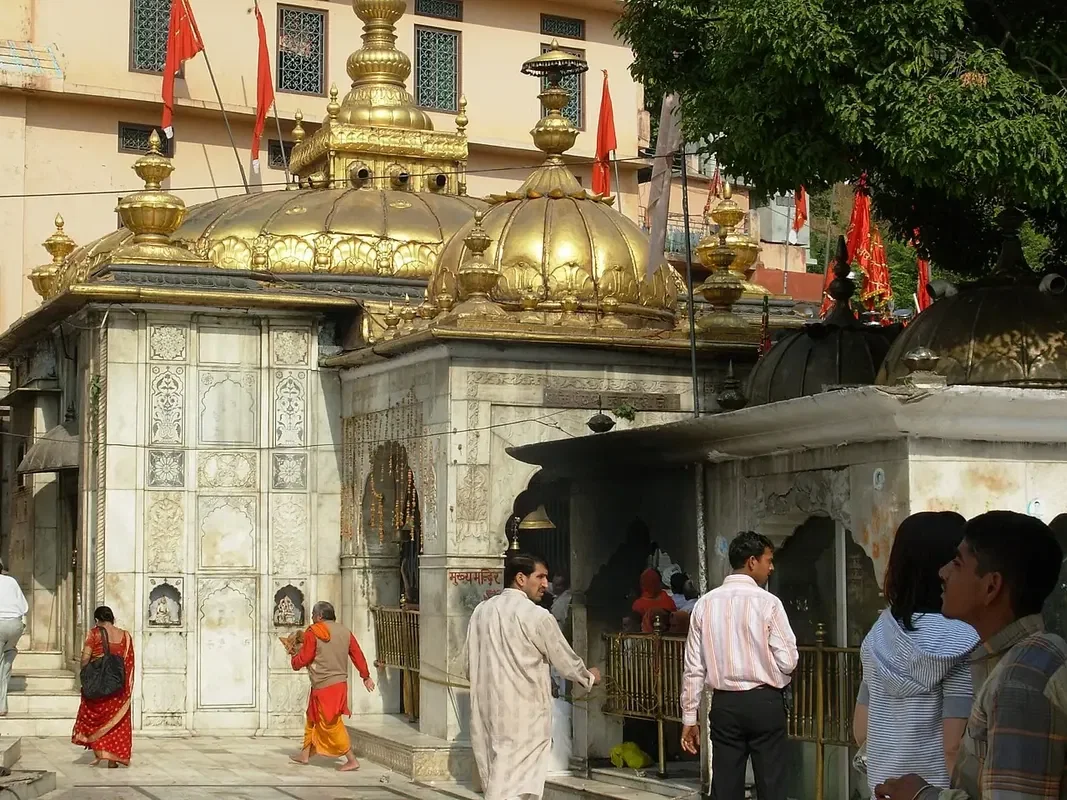
The main temple sits directly over a fissure in the rock that gives off natural gas, and the flames from it are honoured as the Goddess. The building follows a modern Muslim style, crowned by a golden dome and pinnacles. A silver-plated folding door, a gift from Kharak Singh, forms part of the shrine. Smaller temples to various gods and goddesses surround the main shrine, and some images inside have been added in recent times.
Daily seva timings
Indicative — confirm on the temple's official site before visiting
Indicative — confirm on the temple's official site before visiting
Offerings & festivals
-
Spring Navratra fair with large crowds and special pujas
Autumn Navratra fair with large crowds and special pujas
How to reach
Gaggal (Kangra/Dharamshala) Airport is the nearest, about 46–50 km away.
Jawalamukhi Road and Kangra stations are on the narrow-gauge line with limited service; Pathankot broad-gauge station is about 123–140 km away.
About 30 km from Kangra and 56 km from Dharamshala, with bus services to the town.
-
Frequently asked questionsFAQs
The temple is open from 05:00 to 22:00. Mangal Aarti is at 05:00 in summer and 06:00 in winter, Bhog Aarti at 11:30, Evening Aarti at 19:00 and Shaiyan Aarti at 22:00.
More temples in Himachal PradeshMore in Himachal Pradesh
View all →
Mata Chintpurni Temple
Chintpurni, Himachal PradeshChintpurni
Shri Naina Devi Temple
Naina Devi, Himachal PradeshNaina Devi
Chamunda Devi Temple
Chamunda, Himachal PradeshChamunda
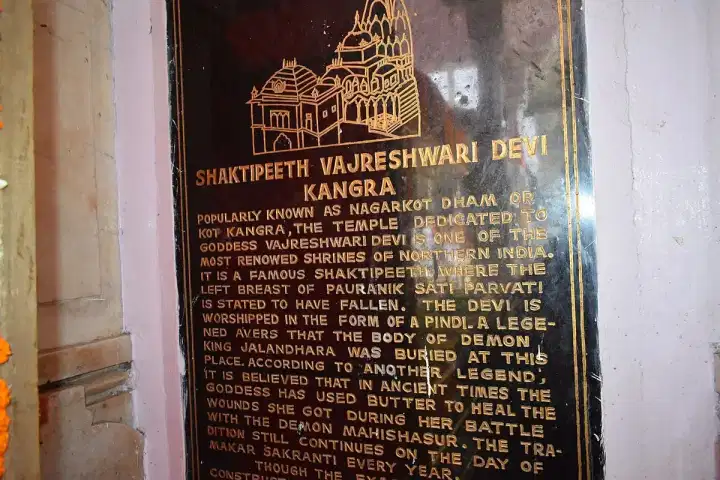
Brajeshwari Devi Temple
Kangra, Himachal PradeshKangra
Recommended Pujas
View all pujas →View allThis information is for awareness only. This temple is not a Vedamandir partner temple.