


Kalkaji Mandir
A shrine to Goddess Kalka in South Delhi, opposite Nehru Place, that draws huge crowds during both Navratris
Kalkaji, South East Delhi, Delhi

-
- General darshan
- Free
- Dress code
- Traditional and formal clothing is recommended.
- Best season
- -
About the temple
Kalkaji Mandir is a temple to Goddess Kali, worshipped here as Kalka. It stands in South Delhi, across from Nehru Place, and the Kalkaji locality takes its name from it. Devotees count it among the oldest Siddha Shakti shrines in the city. The oldest surviving parts of the building date from 1764 onwards, though devotees trace the sacred site much further back. Inside, a twelve-sided marble hall with a door on every side is ringed by an arched verandah. The courtyard holds a fire-ritual space, a sacred Neem tree, a Tulsi plant and small shrines to Shiva, Hanuman, Ganesha, Laxmi Narayan, Bhairon and Sita Ram. A clan of hereditary Brahmin priests looks after the temple's daily running.
Significance
Local tradition places the temple's story in the Satya Yuga. In that account, the gods asked for help against demons led by Raktabija. Goddess Kaushiki rose from Parvati to fight them, but every drop of Raktabija's blood that touched the ground created a new demon. Kali then sprang from Kaushiki's brow and drank the blood before it could fall, which won the battle for the gods. A Hindu legend also holds that Kalika Devi was born on the spot where the temple stands. During Navratri, large fairs bring thousands of devotees to her shrine.
History
- 13rd century BCE · Ancient settlement nearby
In 1966, a Minor Rock Edict of Ashoka was found at nearby Bahapur, proving the ridge was in use in ancient times.
- 21764 · Core structure built
The present core of the temple dates from no earlier than 1764. The Marathas are credited with rebuilding and enlarging it.
- 31783 · Durga Singh's enclosure
Durga Singh enclosed the deity with red sandstone and marble railings. He added inscriptions in Persian and Hindi.
- 41816 · Dome and outer rooms
Mirza Raja Kidarnath, Peshkar of Akbar II, paid for a pyramidal dome, twelve outer rooms and two sandstone tigers.
- 519th century · Merchant additions
Over the next 50 years, local Hindu merchants and bankers built more rooms around the complex.
Architecture
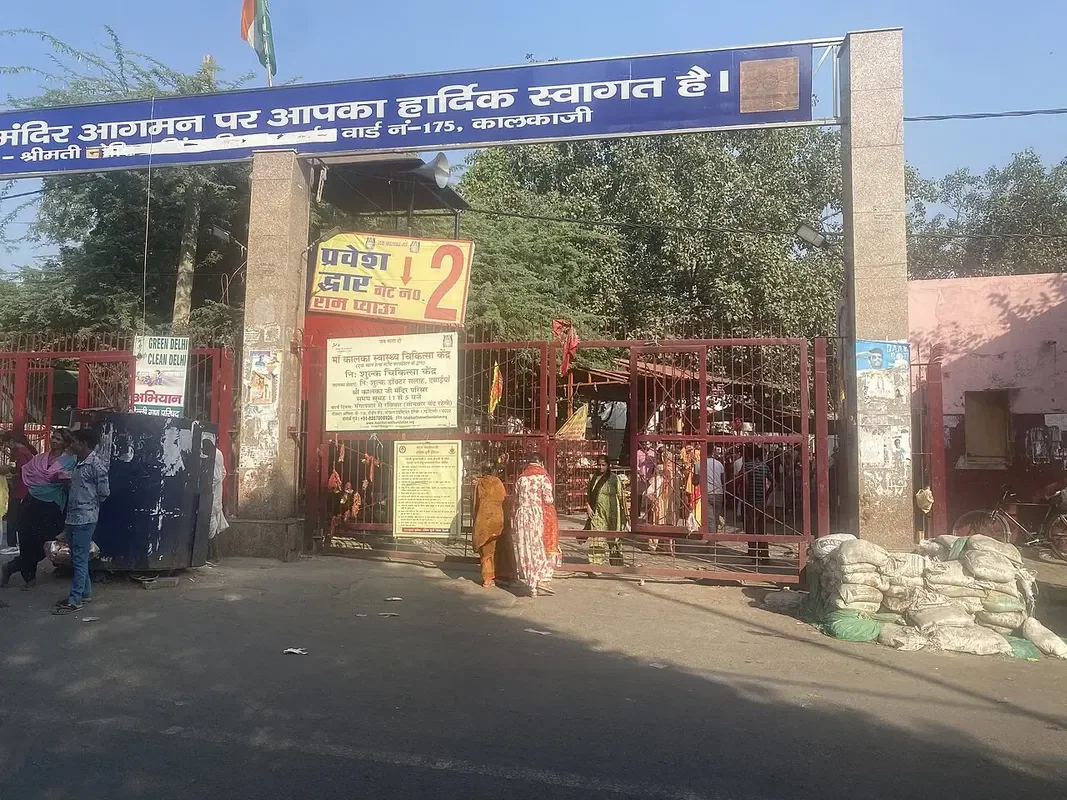
The temple rises as a large pyramid-shaped structure. At its centre is a twelve-sided chamber about 24 feet across, with a marble floor and a doorway on each side. A 9-foot verandah with 36 scalloped arches wraps around this hall. Facing the east door stands a red sandstone pedestal with a stone image of Kali and a trident. Two red sandstone tigers with a bell above them and a tall sandstone trident were added in 1816.
Daily seva timings
-
-
Offerings & festivals
Nine days of worship to the Goddess with fairs and heavy crowds. Temple timings change.
The temple's other great Navratri, with large fairs and big crowds. Timings change.
How to reach
Indira Gandhi International Airport is about 16 km away.
Take the Delhi Metro to Kalkaji Mandir (Violet & Magenta lines, Exit Gate 2) or Nehru Place (Exit Gate 3). Both are a 5-minute walk away.
The temple is on Kalkaji Mandir Road, Kalkaji, New Delhi 110019, opposite Nehru Place.
-
Frequently asked questionsFAQs
Yes. General darshan is free and there is no entry fee.
More temples in DelhiMore in Delhi
View all →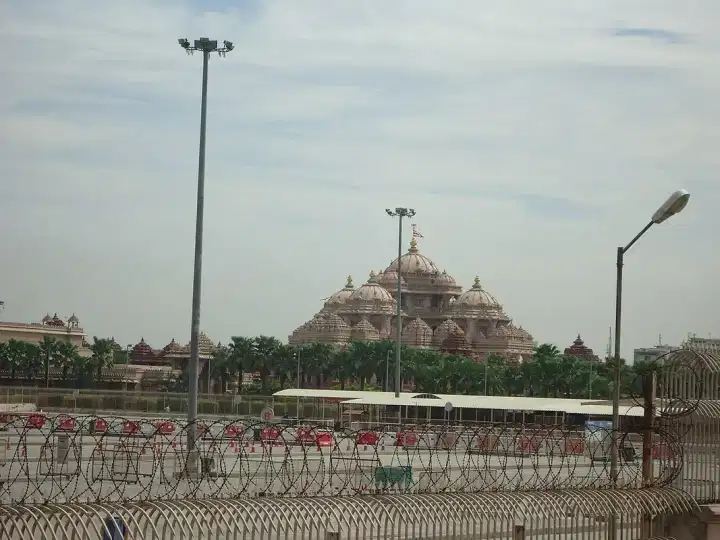
Swaminarayan Akshardham
New Delhi, DelhiNew Delhi
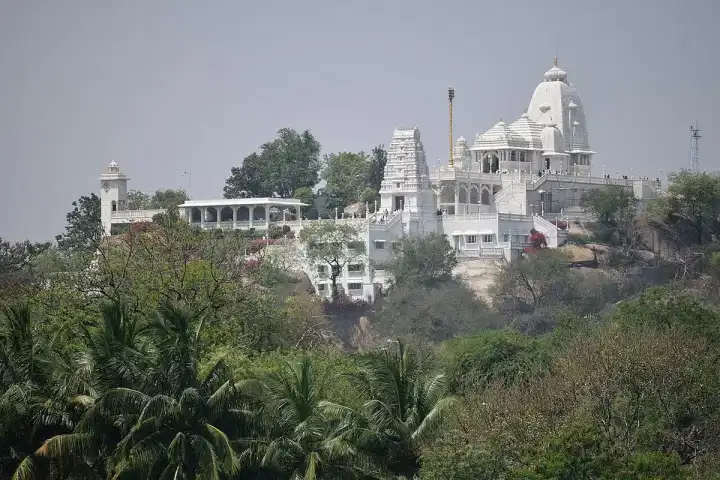
Laxminarayan Temple (Birla Mandir)
New Delhi, DelhiNew Delhi
Jhandewalan Devi Temple
Jhandewalan, DelhiJhandewalan
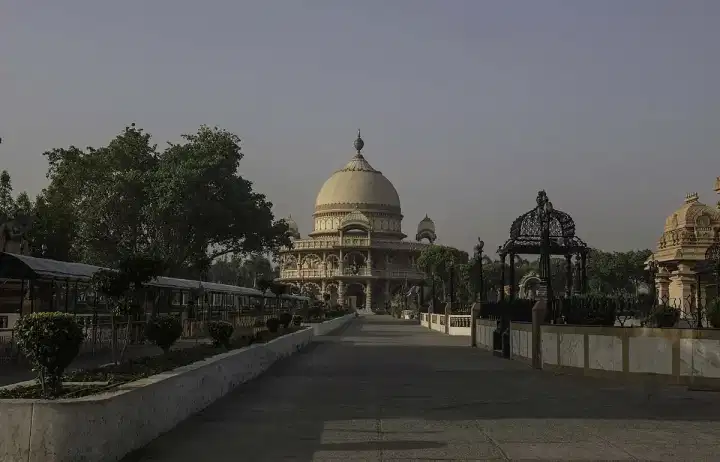
Chhatarpur Temple (Shri Adya Katyayani Shakti Peeth)
Chhatarpur, DelhiChhatarpur
Recommended Pujas
View all pujas →View allThis information is for awareness only. This temple is not a Vedamandir partner temple.