


Shri Durgiana Temple
Amritsar's Silver Temple, rising from a sacred tank, honouring Goddess Durga and Lakshmi-Narayan
Amritsar, Amritsar, Punjab

Open 05:15 to 21:30 · Midday rest 13:00–15:00
- Darshan
- -
- Dress code
- Traditional or formal, modest clothing is suggested.
- Best season
- -
About the temple
Shri Durgiana Mandir is a much-loved Hindu temple in the city of Amritsar, Punjab. It takes its name from Goddess Durga, the chief Goddess worshipped here, while murtis of Lakshmi and Vishnu (Lakshmi-Narayan) are also enshrined and worshipped. The temple stands in the middle of a sacred tank and is reached by a bridge. Its form closely follows the Sikh Harmandir Sahib (Golden Temple), which lies in the same city. Devotees also call it the Silver Temple because of its large, finely worked silver doors. The complex includes old subsidiary shrines such as Seetla Mata and Bara Hanuman, and the temple keeps a rich collection of Hindu scriptures. It is managed by the Shri Durgiana Committee.
Significance
Durgiana Mandir is an important Hindu pilgrimage centre in Punjab, drawing large crowds especially during Navratri. During the ten days of Navratri and Dussehra, families bring children dressed as langurs to the Bada Hanuman temple in the complex for the famous Langur Mela. In the holy month of Shravan, newlywed couples come together to worship Radha Krishna, with women wearing flower jewellery. Out of respect for the sacred site, the sale of tobacco, liquor and meat is barred within 200 metres of the temple.
History
- 116th century · Original temple and tank
Government records date the first temple and its sacred tank to this period.
- 21868 · Tank in municipal records
Documents of the Amritsar Municipal Committee mention the temple tank.
- 31893 · Recorded in the Gazetteer
The Amritsar District Gazetteer describes Durgiana Sarovar and the Devi Dwara around it, crowded with Hindu pilgrims.
- 41921 · Temple rebuilt
The temple was rebuilt in the style of the Harmandir Sahib, giving it its present form.
- 51924 · Foundation stone laid
Pandit Madan Mohan Malviya laid the foundation stone on Ganga Dashami.
Architecture
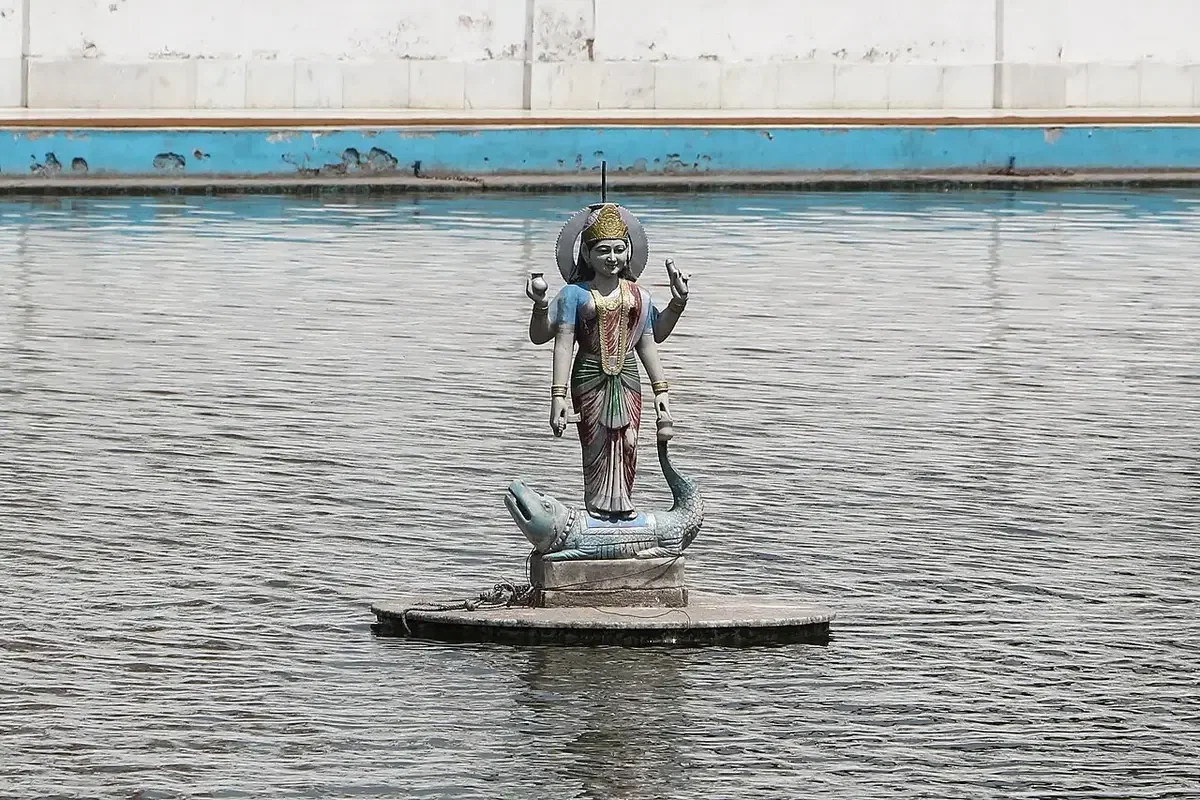
The temple rises from the middle of a large sacred lake and is approached by a bridge. Its dome and canopies mirror those of the Golden Temple, and the dome is gilded and lit with colourful lights after dark. Marble is used widely throughout the building, and gold-plated embossed sculptures adorn it. The large, beautifully crafted silver doors give the shrine its popular name, the Silver Temple. Historic smaller shrines, including Seetla Mata and Bara Hanuman, stand within the complex.
Daily seva timings
As published on the temple's official site
As published on the temple's official site
Offerings & festivals
Ten days from Sharad Navratri to Dussehra; children dressed as langurs pray at Bada Hanuman.
In the Shravan month, newlywed couples worship Radha Krishna; women wear flower jewellery.
The birth of Lord Krishna is celebrated at the temple.
Diwali is celebrated, followed by the Annakoot offering.
How to reach
Sri Guru Ram Dass Jee International Airport in Amritsar is the nearest airport.
Amritsar Junction is the nearest railway station, about 1.5 km from the temple.
The temple is outside Hathi Gate near Goal Bagh in Amritsar, close to the Golden Temple. Taxis are available across the city.
-
Frequently asked questionsFAQs
Yes, general darshan at Shri Durgiana Temple is free.
More temples in PunjabMore in Punjab
View all →-
Recommended Pujas
View all pujas →View allThis information is for awareness only. This temple is not a Vedamandir partner temple.