


Sri Amareswara Swamy Temple (Amararamam)
A Pancharama Kshetra of Lord Shiva in Amaravathi, where a 15-foot white marble linga is worshipped beside the Krishna
Amaravathi, Palnadu, Andhra Pradesh

Darshan 6 AM – 1 PM and 4 PM – 8 PM daily
- Free Darshan
- Free
- Seeghra Darshanam
- ₹100
- Dress code
- Traditional, formal clothing is expected. Shorts and casual wear are not allowed.
- Best season
- -
About the temple
Sri Amareswara Swamy Temple, also known as Amararamam, stands in Amaravathi in the Palnadu district of Andhra Pradesh, close to the Krishna River. It is one of the five Pancharama Kshetras of Lord Shiva, and the only one of the five on the Krishna rather than in the Godavari region. The presiding deity, Lord Amareswara, also called Amaralingeswara, is a white marble Shivalinga 15 feet tall, the largest of all the Pancharama lingas. Priests perform worship and abhishekam from a raised platform inside the sanctum. Goddess Bala Chamundika is honoured here as His consort. Amaravathi was also a great Buddhist centre in ancient times, so the temple sits in a landscape shaped by both traditions.
Significance
Tradition holds that Lord Indra installed the linga here, which is why Shiva is worshipped as Amareswara, lord of the immortals. Legend connects the site with the demon king Tarakasura, who defeated the gods after receiving a boon from Shiva. Shiva vowed to destroy him, and the gods came to dwell at this place, giving Amaravati its name. As a Pancharama shrine on the Krishna River, the temple is an important pilgrimage stop for Shiva devotees.
History
- 11st–2nd century CE · Early Shaiva worship
Satavahana-era sculptures, including a mukhalinga and a life-sized Nandi, show Shiva was worshipped here very early.
- 211th–12th century · Temple inscriptions begin
The temple took shape in this era; the earliest of its 35 wall inscriptions dates to 1129 CE.
- 31184 CE · Keta II's inscription
Kota chief Keta II praised both the Buddhist stupa and Lord Amareswara, showing the two faiths side by side.
- 414th century · Reddi patronage
Rulers of the Reddi dynasty made important contributions to the temple.
- 516th century · Krishnadevaraya's mandapam
The Vijayanagara emperor Sri Krishnadevaraya added a mandapam to the temple.
- 6Late 18th century · Vasireddy Venkatadri Nayudu
The zamindar of Chintapalli moved to Amaravathi, expanded the temple and granted land to its priests.
Architecture
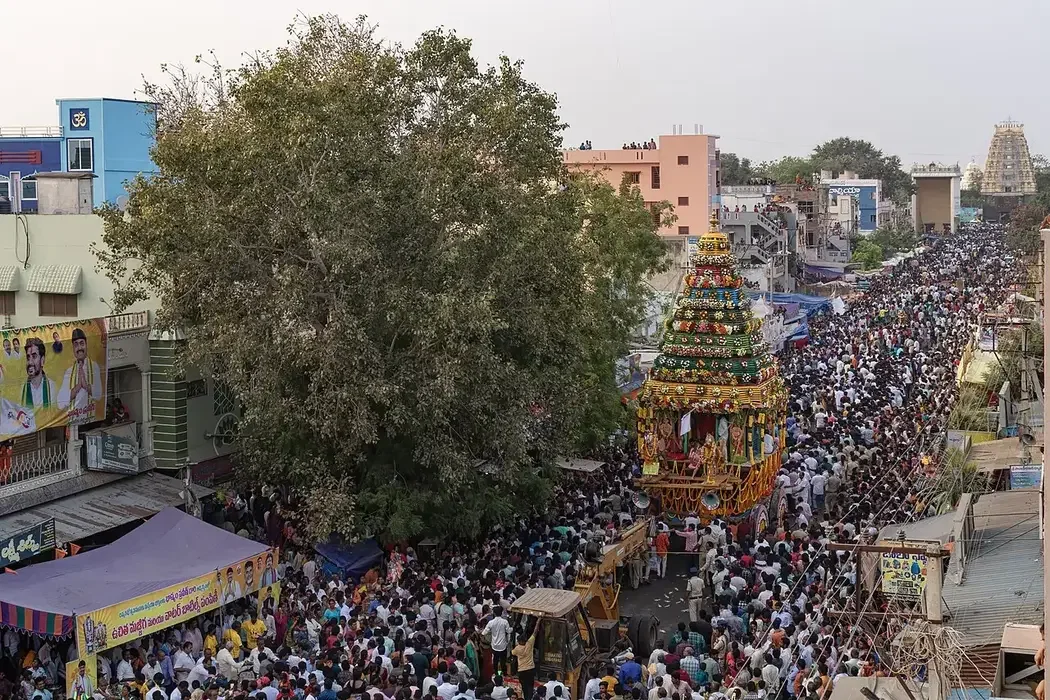
The temple complex is enclosed by four tall Dravidian gopurams, with a central vimana built in the same style. It stands on Krouncha Saila, a small hill near the Krishna River, and blends Dravidian design with traces of earlier Buddhist influence, such as a white marble lotus medallion in the foundation. The sanctum is raised and reached by a flight of steps. Inside stands the 15-foot white marble linga of Lord Amareswara, three feet around, with a separate shrine for Goddess Bala Chamundeswari.
Daily seva timings
As published on the temple's official site
As published on the temple's official site
Offerings & festivals
The temple's biggest celebration of Lord Amareswara.
Celebrated in honour of the Goddess at the temple.
Divine wedding festivals celebrated at the temple.
How to reach
The nearest airport is Vijayawada (Gannavaram) Airport.
The nearest railway station is Peddakurapadu, 19 km away.
Amaravathi is 32 km from Guntur and 46 km from Vijayawada. APSRTC buses run from Guntur, Vijayawada and Mangalagiri.
-
Frequently asked questionsFAQs
Yes. General darshan is free. A Seeghra (quick) darshan ticket costs ₹100.
More temples in Andhra PradeshMore in Andhra Pradesh
View all →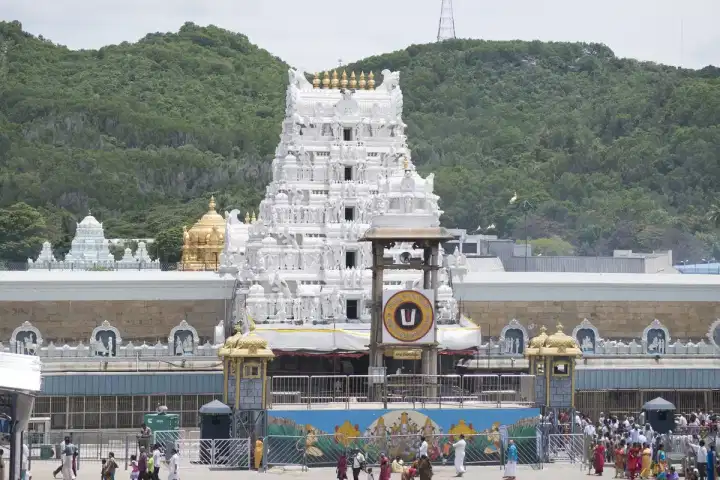
Tirumala Sri Venkateswara Temple
Tirumala, Andhra PradeshTirumala
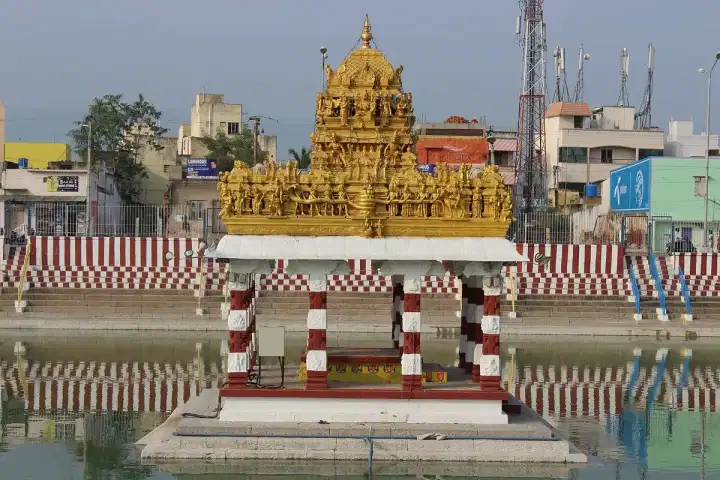
Sri Padmavathi Ammavari Temple, Tiruchanur
Tiruchanur, Andhra PradeshTiruchanur
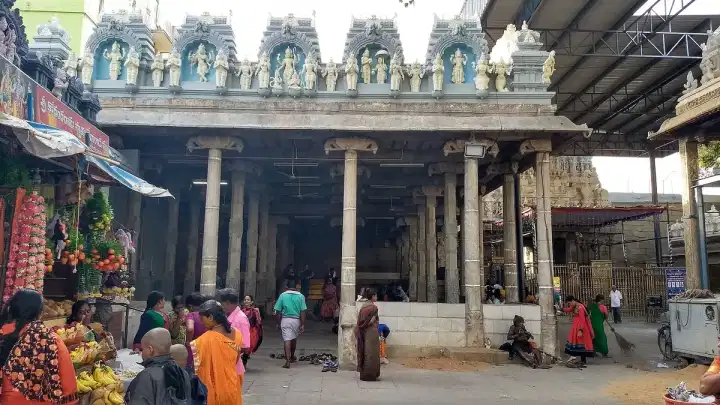
Sri Govindaraja Swamy Temple
Tirupati, Andhra PradeshTirupati
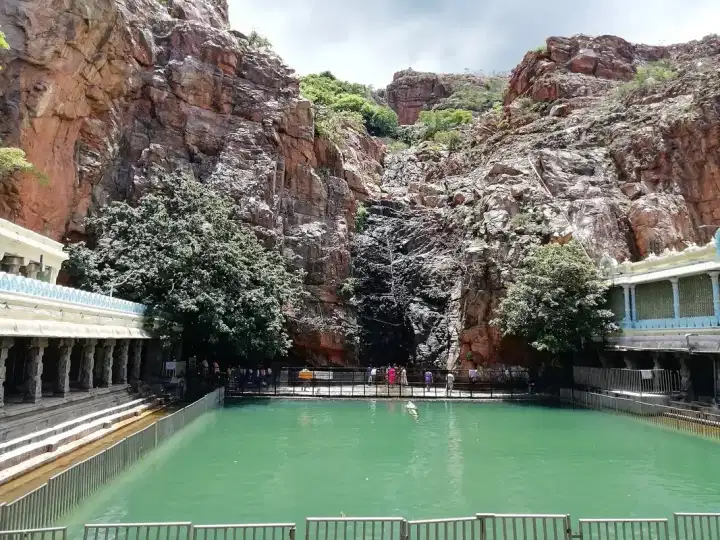
Sri Kapileswara Swamy Temple
Tirupati, Andhra PradeshTirupati
Recommended Pujas
View all pujas →View allThis information is for awareness only. This temple is not a Vedamandir partner temple.