


Sri Gavi Gangadhareshwara Temple
Ancient cave shrine of Lord Shiva in Bengaluru, where the Sankranti sun lights the linga
Bengaluru (Gavipuram), Bengaluru Urban, Karnataka

Morning and evening darshan · 06:00–12:30 and 17:00–20:00
- Darshan
- -
- Dress code
- Traditional or formal clothing is recommended.
- Best season
- -
About the temple
Sri Gavi Gangadhareshwara Temple, also called the Gavipuram Cave Temple, is a shrine of Lord Shiva set inside a natural cave in Gavipuram, South Bengaluru. It is one of the oldest temples in the city and a fine example of Indian rock-cut architecture, with the sanctum carved into solid stone. Temple tradition traces the first cave shrine to the sages Gautama and Bharadwaja. The present temple owes much to Kempe Gowda I, the 16th-century founder of Bengaluru. Devotees come for darshan of Shiva as Gangadhareshwara. The forecourt draws visitors with its striking stone discs and carved pillars. Twice a year the setting sun reaches deep into the cave and falls on the linga. At Makara Sankranti this sight brings huge crowds.
Significance
The temple is famous for its careful alignment with the sun. On evenings around Makara Sankranti in mid-January, sunlight passes between the horns of the Nandi and rests on the Shiva linga for about an hour. Lakhs of devotees gather to witness it. A second window of sunlight on the linga comes from late November to early December. Maha Shivaratri also brings very large crowds to this ancient cave shrine.
History
- 1Vedic period · Cave shrine of the sages
Temple tradition credits the sages Gautama and Bharadwaja with the original cave temple.
- 216th century CE · Built by Kempe Gowda I
Bengaluru's founder Kempe Gowda I built and renovated the temple after his release from a five-year imprisonment by Rama Raya.
- 31 May 1792 · Painted by the Daniells
Thomas and William Daniell painted the shrine, showing new walls and enclosures added over time.
- 41961 · Protected monument
The temple is protected under the Karnataka Ancient and Historical Monuments Act, 1961.
Architecture
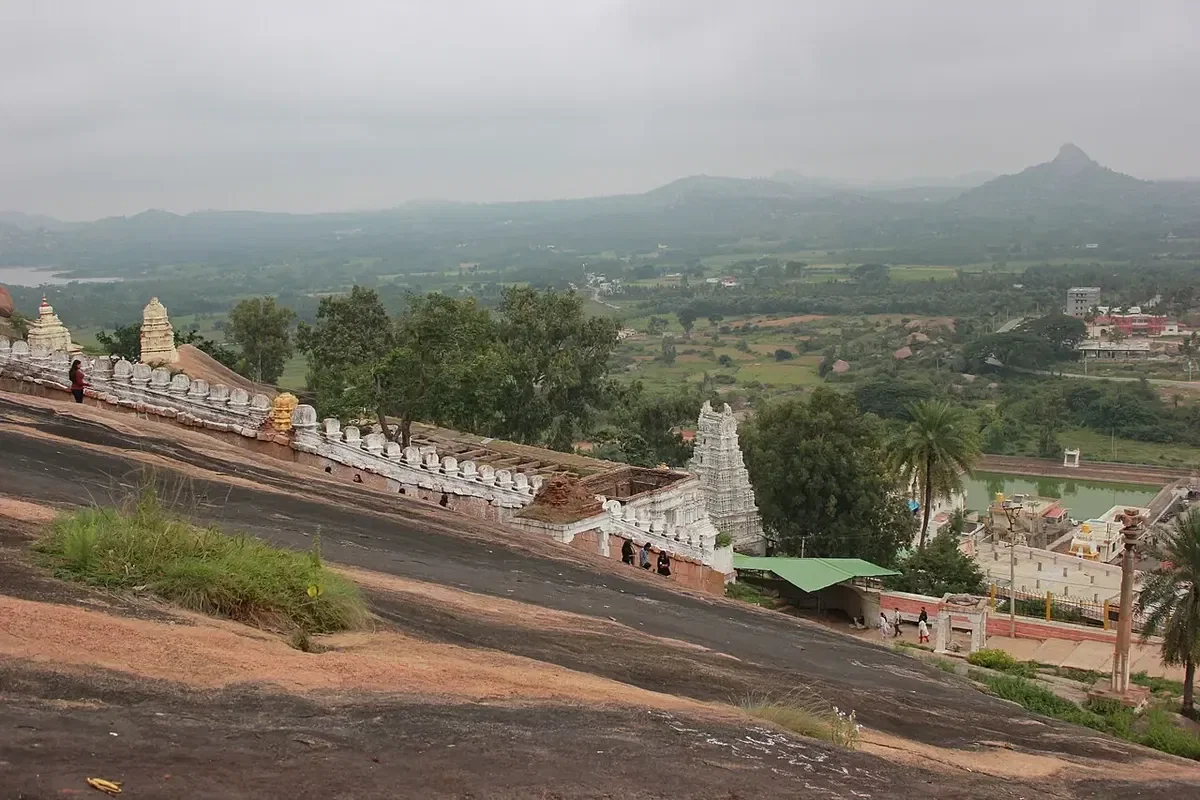
The shrine sits in a natural cave and is cut into a single mass of stone. Its open courtyard holds several monolithic sculptures. The best-known are two granite pillars carrying huge discs of the sun and moon. Other pillars are topped by seated Nandi figures, and some represent the damaru and trishul. Paintings by Thomas and William Daniell dated 1 May 1792 show that walls and enclosures were added to the temple over time.
Daily seva timings
Indicative — confirm on the temple's official site before visiting
Indicative — confirm on the temple's official site before visiting
Offerings & festivals
-
Evening sunlight passes between Nandi's horns onto the linga for about an hour. Lakhs of devotees visit.
Sunlight lights the shrine again from 26 November to 2 December.
A major Shaiva festival here that draws very large crowds.
How to reach
-
The main railway stations are Bengaluru City (Majestic) and Yeshwanthpur, with buses and taxis onward. The nearest metro is National College (Green Line).
The temple is in Gavipuram, Kempegowda Nagar, South Bengaluru. It lies off NH75 (Mysore Road) via Sirsi Circle.
-
Frequently asked questionsFAQs
Yes, general darshan at the temple is free.
More temples in KarnatakaMore in Karnataka
View all →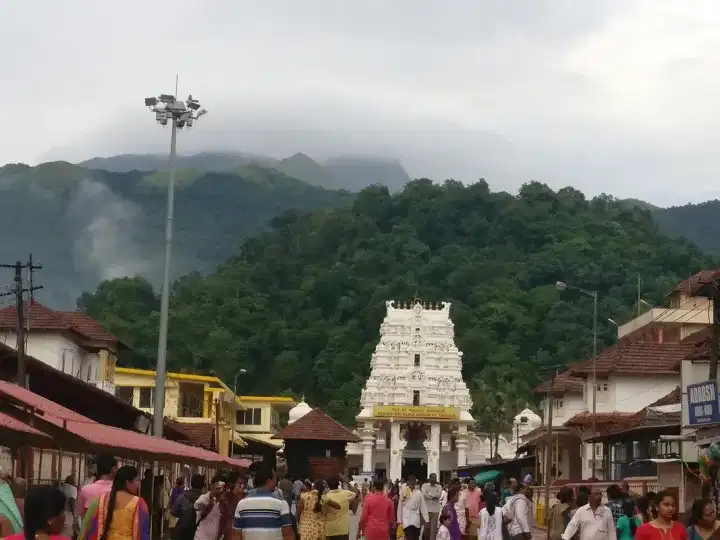
Kukke Sri Subrahmanya Temple
Subrahmanya, KarnatakaSubrahmanya
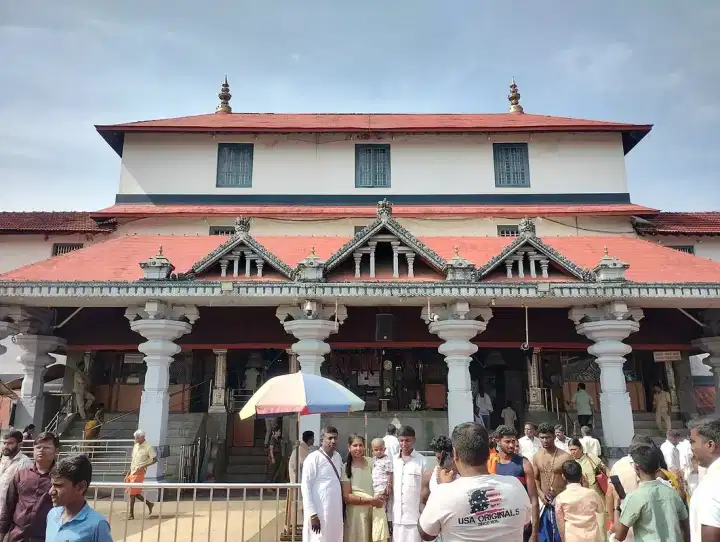
Dharmasthala Sri Manjunatha Temple
Dharmasthala, KarnatakaDharmasthala
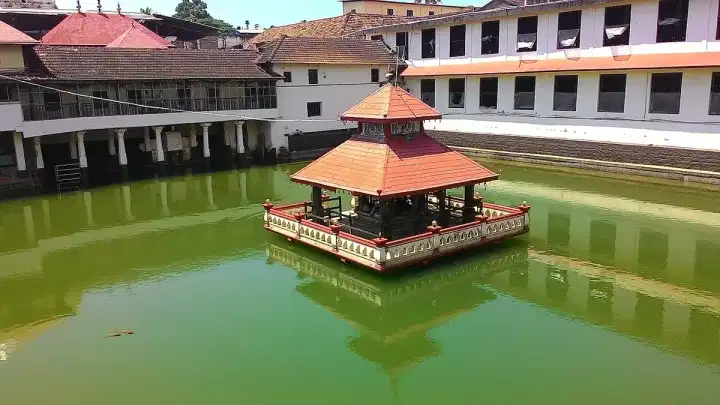
Udupi Sri Krishna Matha
Udupi, KarnatakaUdupi
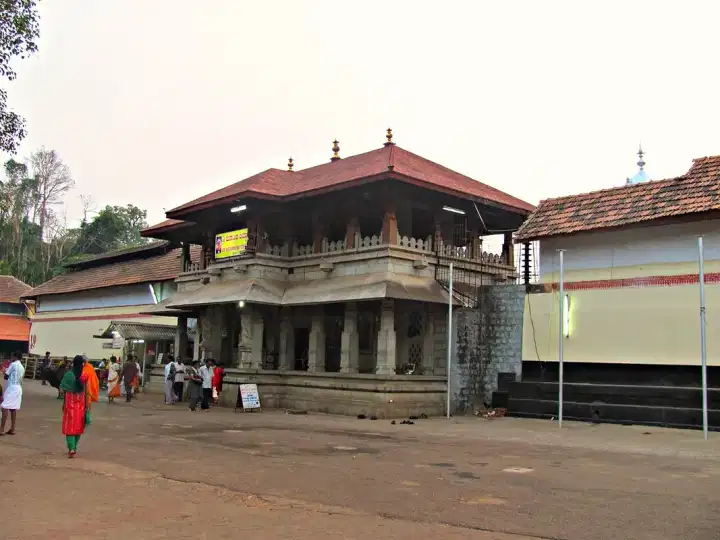
Kollur Sri Mookambika Temple
Kollur, KarnatakaKollur
Recommended Pujas
View all pujas →View allThis information is for awareness only. This temple is not a Vedamandir partner temple.