


Sri Virupaksha Temple, Hampi
An ancient Shiva shrine at the end of Hampi Bazaar, still alive with worship amid the ruins of an empire
Hampi, Vijayanagara, Karnataka

Open daily 06:00–13:00 and 17:00–21:00
- General entry
- Free
- Dress code
- Wear modest clothes and avoid shorts and sleeveless tops. Traditional dress is suggested: dhoti or kurta-pajama for men, and saree or salwar kameez for women. Footwear is not allowed inside.
- Best season
- -
About the temple
Sri Virupaksha Temple stands at the western end of Hampi Bazaar in Karnataka's Vijayanagara district. It is dedicated to Lord Virupaksha, a form of Shiva, who is worshipped here with Goddess Pampa. Worship at this spot goes back to about the 7th century, long before Hampi became the capital of the Vijayanagara Empire. A small shrine grew into a vast complex under the Vijayanagara rulers. Lakkana Dandesha built the main complex. He was a chieftain who served King Deva Raya II. The city was sacked in 1565, and most of Hampi's other temples were ruined, but prayers here never stopped. Today it is the one temple in Hampi that is well kept and still in active worship. It is part of the UNESCO-listed Group of Monuments at Hampi.
Significance
For devotees, this temple is the living heart of Hampi, where Virupaksha and Pampa are honoured as a divine couple. It began as a local Shaiva pilgrimage site linked with Pampa and Bhairava. Over time it grew into the main centre of Virupaksha worship. Every December, large crowds gather for the betrothal and wedding of the Lord and the Goddess. In February, the temple chariot is pulled during the annual car festival. Worship here has continued for more than a thousand years, even through the fall of an empire.
History
- 17th century CE · Worship begins
Worship at the Virupaksha-Pampa sanctuary can be traced back to about this time.
- 212th century · Mula Virupaksha shrine
An early shrine helped turn Hampi into a major centre of Virupaksha worship.
- 31510 CE · Krishnadevaraya's additions
The emperor commissioned the ornate central pillared hall to mark his accession. He also built the eastern gopuram.
- 41565 · City destroyed
Vijayanagara was sacked after the Battle of Talikota, but worship at the temple carried on.
- 5Early 19th century · Restoration
Major renovations took place, including repairs to the broken north and east gopurams.
- 61986 · UNESCO listing
The temple was inscribed as part of the Group of Monuments at Hampi.
Architecture
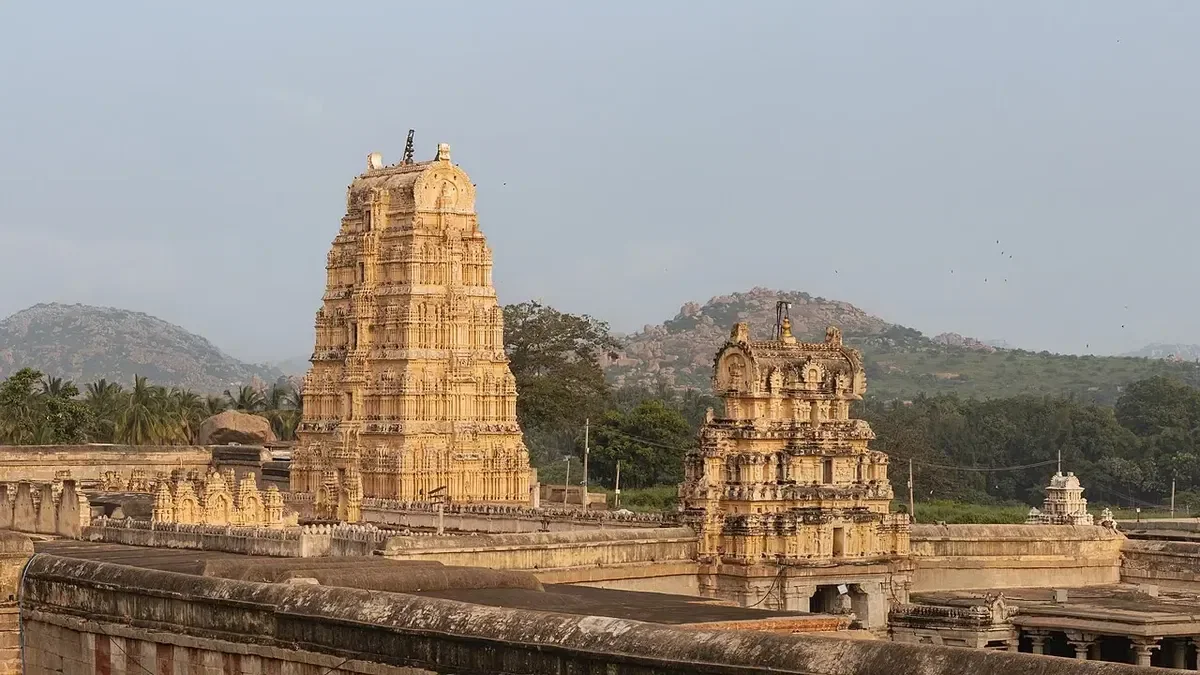
The temple has a sanctum, three antechambers, a pillared hall and an open pillared hall, all with finely carved pillars. Around them are a cloister, courtyards, gateways and smaller shrines. The largest gateway is the nine-tiered eastern gopuram, 50 m tall, built of brick on a stone base. The northern Kanakagiri gopura leads towards the Tungabhadra River. Repeating, fractal-like patterns rise up the triangular towers.
Daily seva timings
Indicative — confirm on the temple's official site before visiting
Indicative — confirm on the temple's official site before visiting
Offerings & festivals
-
Large crowds gather to celebrate the betrothal and marriage of Lord Virupaksha and Goddess Pampa.
The annual chariot festival along the Hampi Bazaar street.
How to reach
The nearest airport is Jindal Vijayanagar Airport, 37 km away.
The nearest railway station is Hospet Junction, 13 km away. Buses and taxis run from there to Hampi.
The temple stands at the western end of Hampi Bazaar in Vijayanagara district. It is linked by road to Hospet and to Bengaluru, which is 350 km away.
-
Frequently asked questionsFAQs
Yes, general entry for darshan is free.
More temples in KarnatakaMore in Karnataka
View all →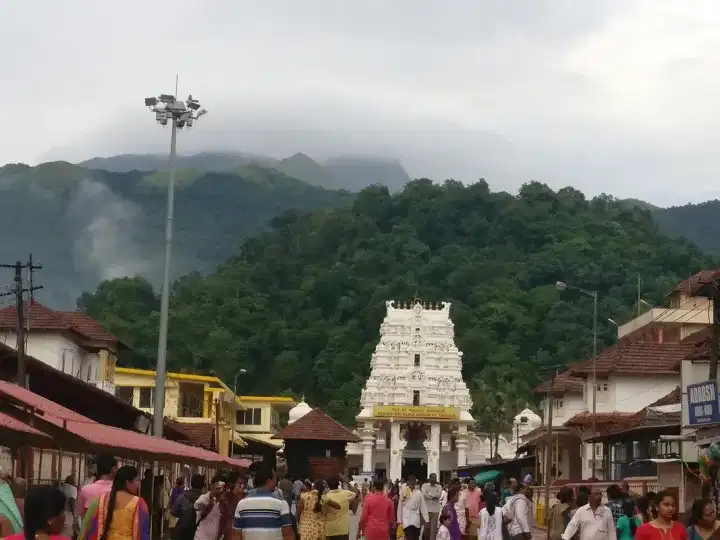
Kukke Sri Subrahmanya Temple
Subrahmanya, KarnatakaSubrahmanya
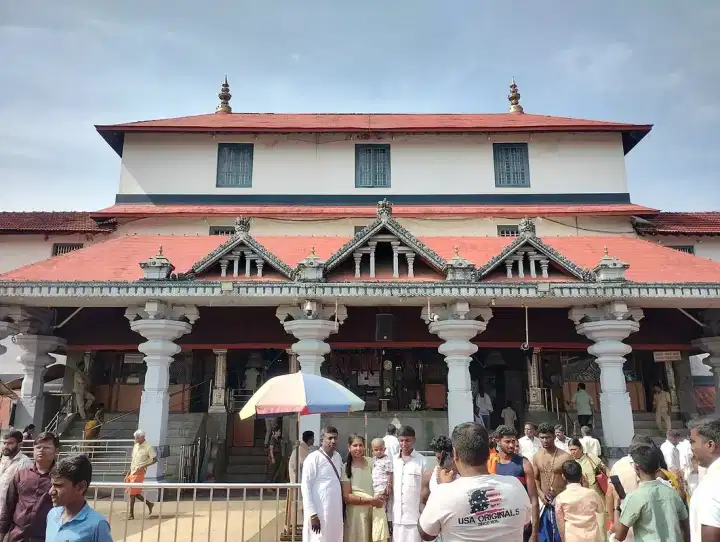
Dharmasthala Sri Manjunatha Temple
Dharmasthala, KarnatakaDharmasthala
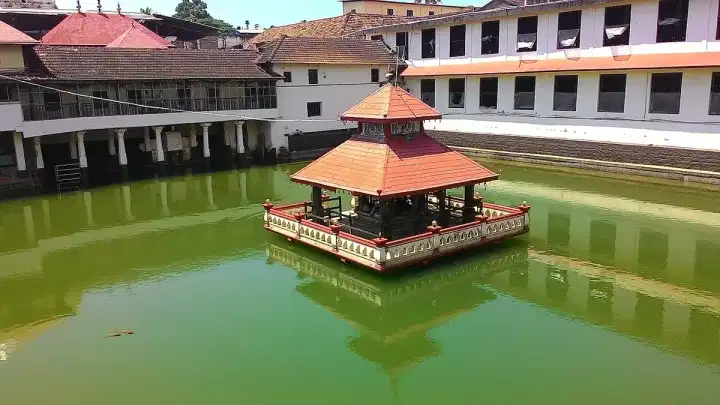
Udupi Sri Krishna Matha
Udupi, KarnatakaUdupi
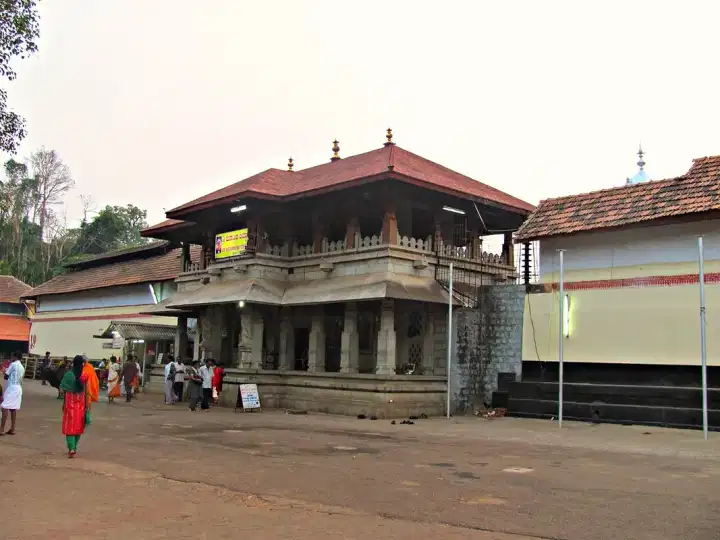
Kollur Sri Mookambika Temple
Kollur, KarnatakaKollur
Recommended Pujas
View all pujas →View allThis information is for awareness only. This temple is not a Vedamandir partner temple.