


Brihadeeswarar Temple (Big Temple)
The Big Temple of Thanjavur, built by Rajaraja I between 1003 and 1010 CE and still a living place of Shiva worship.
Thanjavur, Thanjavur, Tamil Nadu

Open daily 06:00–12:30 and 16:00–20:30
- General darshan
- Free
- Dress code
- No formally enforced dress code. Modest traditional clothing is recommended; shorts, mini-skirts, low-waist jeans and sleeveless tops are discouraged. Remove footwear before entering.
- Best season
- -
About the temple
Brihadeeswarar Temple stands on the south bank of the Cauvery in Thanjavur, Tamil Nadu. Locally it is called Thanjai Periya Kovil or Peruvudaiyar Kovil. Its builder, the Chola emperor Rajaraja I, named it Rajarajeswaram and completed it between 1003 and 1010 CE. It is one of the largest Hindu temples and is also known as Dakshina Meru. Lord Brihadeeswarar is worshipped here along with Goddess Periya Nayaki. With the Gangaikonda Cholapuram and Airavatesvara (Darasuram) temples, it forms the UNESCO World Heritage Site called the Great Living Chola Temples. The Archaeological Survey of India protects the monument, yet daily worship continues, and general darshan is free for every devotee.
Significance
For devotees and historians alike, this temple marks the high point of Chola imperial power and of Dravidian temple building. The sanctum holds a giant linga beneath a towering granite vimana, and a huge monolithic Nandi faces the Lord. Tamil inscriptions around the base of the main shrine record how the temple was run, even naming its dancers, musicians and staff, a rare window into temple life a thousand years ago.
History
- 11003–1010 CE · Built by Rajaraja I
Chola king Rajaraja I raised the granite temple and named it Rajarajeswaram.
- 216th–17th century · Nayaka-era shrines added
Shrines for Murugan, Amman (Parvati) and Nandi were added during Nayaka rule.
- 3Maratha period · Cared for by Thanjavur Marathas
The Marathas of Thanjavur kept the temple well maintained.
- 41777 · Outer fort wall built
French colonial forces added a high defensive outer wall and used the temple as an arsenal.
- 51987 · UNESCO World Heritage Site
Inscribed by UNESCO, later grouped with two other Chola temples as the Great Living Chola Temples.
- 62015 · Chariot procession revived
A new temple chariot made its first procession, the first in about a hundred years.
Architecture
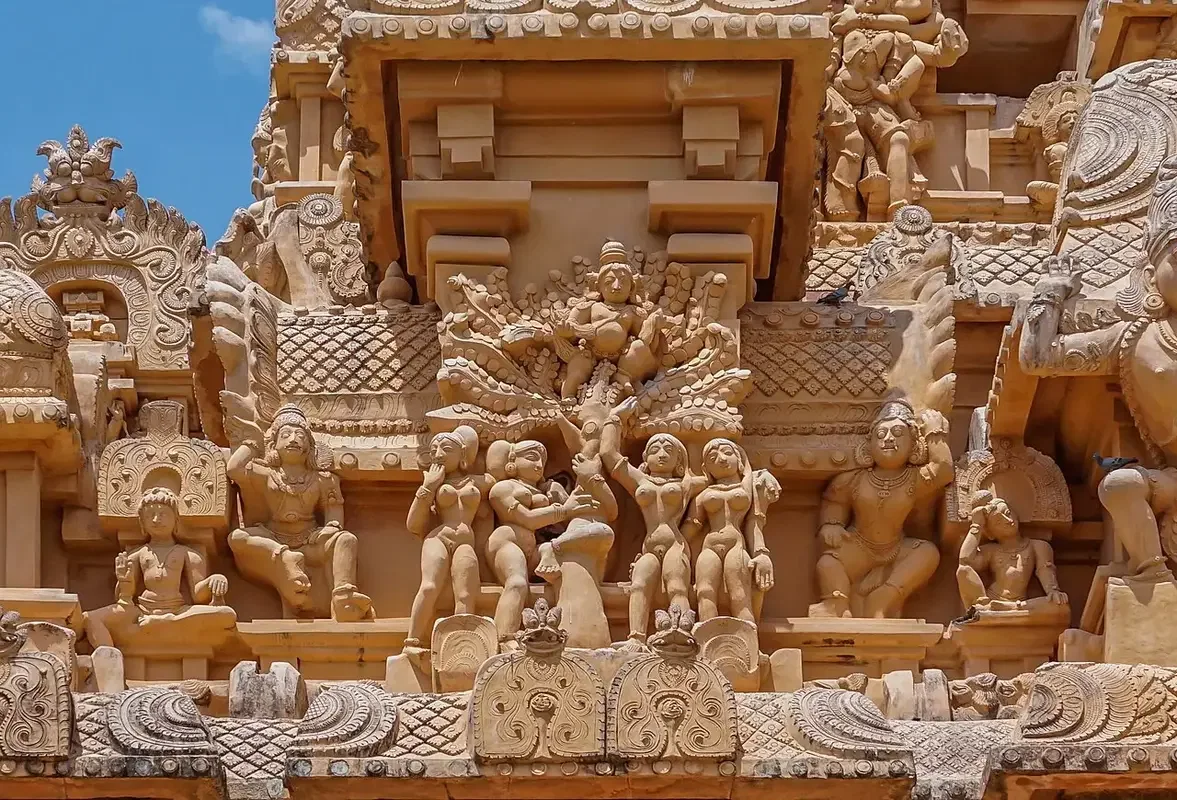
The temple faces east and follows strict axial, symmetrical planning, its rectangular complex laid out almost as two stacked squares. Devotees enter through the Keralantakan gateway, named after a title of Rajaraja, then the richly carved Rajarajan gateway, before reaching the Nandi hall, the halls of worship and the sanctum. Above it rises the 63.4 m granite vimana. A pillared veranda of about 450 m rings the courtyard for circumambulation.
Daily seva timings
As published on the temple's official site
As published on the temple's official site
Offerings & festivals
A 10-day classical dance festival held around Mahashivratri, with leading and regional artists.
How to reach
Tiruchirappalli International Airport (TRZ), about 55 km away.
Thanjavur railway station, on the Indian Railways network with daily trains to major cities.
Thanjavur is about 350 km southwest of Chennai, linked by national highways and Tamil Nadu bus services.
-
Frequently asked questionsFAQs
Yes. General darshan is free for all devotees.
More temples in Tamil NaduMore in Tamil Nadu
View all →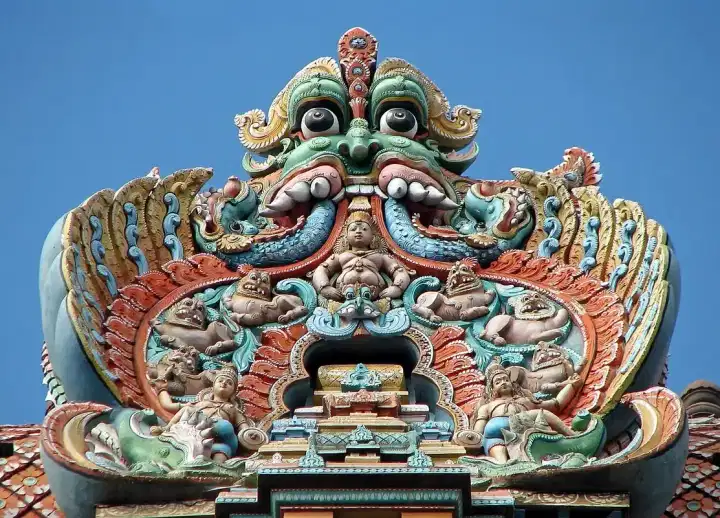
Meenakshi Sundareswarar Temple, Madurai
Madurai, Tamil NaduMadurai
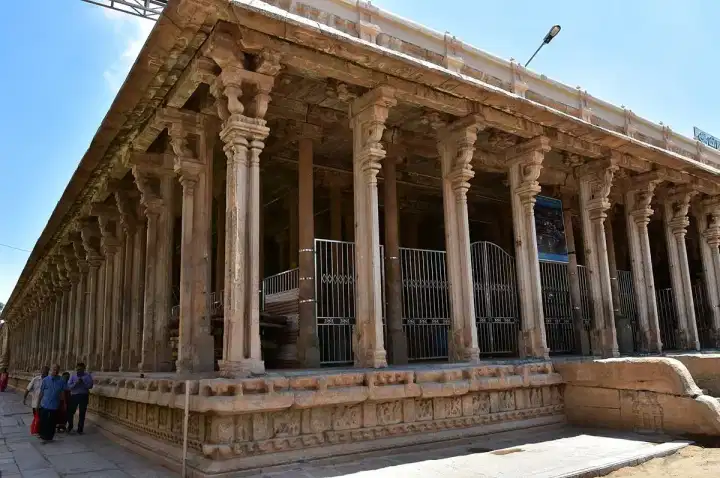
Srirangam Sri Ranganathaswamy Temple
Srirangam, Tamil NaduSrirangam
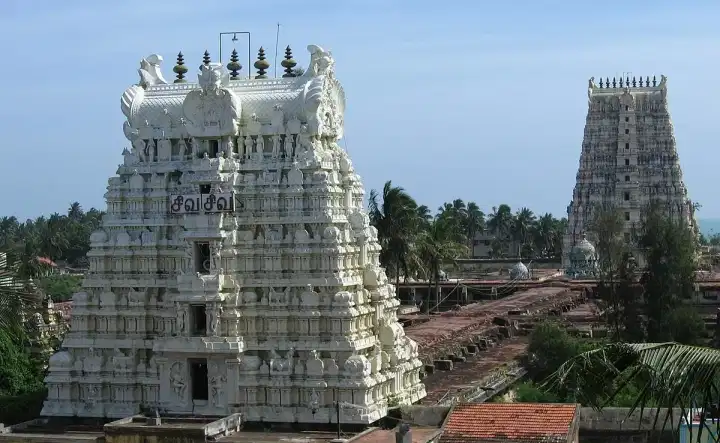
Rameswaram Ramanathaswamy Temple
Rameswaram, Tamil NaduRameswaram
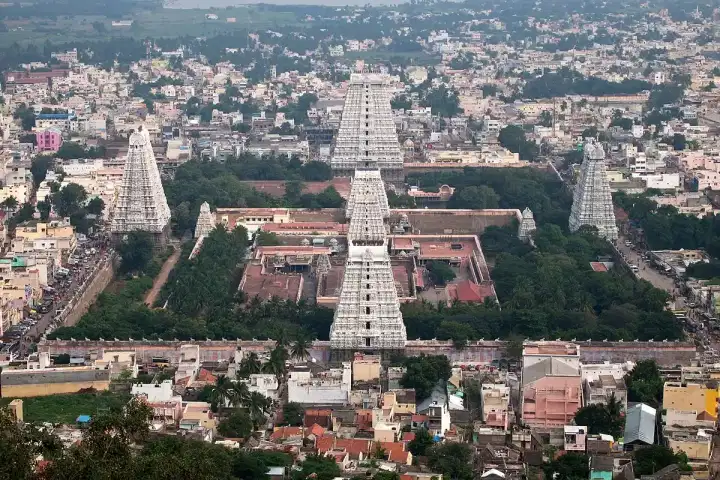
Arunachaleswarar Temple, Tiruvannamalai
Tiruvannamalai, Tamil NaduTiruvannamalai
Recommended Pujas
View all pujas →View allThis information is for awareness only. This temple is not a Vedamandir partner temple.