


Grishneshwar Jyotirlinga Temple
One of Lord Shiva's twelve Jyotirlingas, in Verul village beside the Ellora Caves, Maharashtra
Verul (Ellora), Chhatrapati Sambhajinagar, Maharashtra

Darshan 05:30 – 21:00 daily · Morning Aarti from 05:00
- General darshan
- Free
- Dress code
- Men must remove their shirts before entering the inner sanctum, as a sign of humility. Women should dress modestly, with shoulders and knees covered.
- Best season
- -
About the temple
Grishneshwar Temple stands in Verul village in Chhatrapati Sambhajinagar district of Maharashtra. It is about 1.5 km from the famous Ellora Caves. It is one of the twelve Jyotirlinga shrines of Lord Shiva and is a nationally protected site. The temple lies 30 km north-west of Chhatrapati Sambhajinagar (Aurangabad) city and 300 km from Mumbai. Grishneshwar is mentioned in the Shiva Purana, the Skanda Purana, the Ramayana and the Mahabharata. Today it is a busy, living place of pilgrimage, and long queues of devotees gather every day for darshan of the Jyotirlinga. Anyone may enter the temple grounds and its inner halls. Men remove their shirts before stepping into the sanctum, as local tradition requires.
Significance
Grishneshwar is traditionally counted as the twelfth and last of Lord Shiva's Jyotirlingas. It is popularly called the smallest Jyotirlinga shrine in India. Devotees believe that worship here brings the merit of visiting all twelve Jyotirlingas. The name is linked to Ghushma (Ghrishna), a devoted woman who shaped and worshipped earthen Shivalingas every day. The Padma Purana tells that she asked Shiva to dwell here, which gives the name 'Lord of Ghrishna'. A rarer form of the name means 'lord of compassion'.
History
- 113th–14th century · Destroyed under the Sultanate
The temple structure was destroyed under the Delhi Sultanate.
- 216th century · Restored by Maloji Bhosale
Maloji Bhosale, grandfather of Chhatrapati Shivaji, restored the temple.
- 317th century · Years of conflict
The temple was rebuilt and destroyed several times during the Mughal–Maratha conflicts.
- 418th century · Present temple built
The temple was rebuilt in its present form under Holkar royal patronage.
Architecture
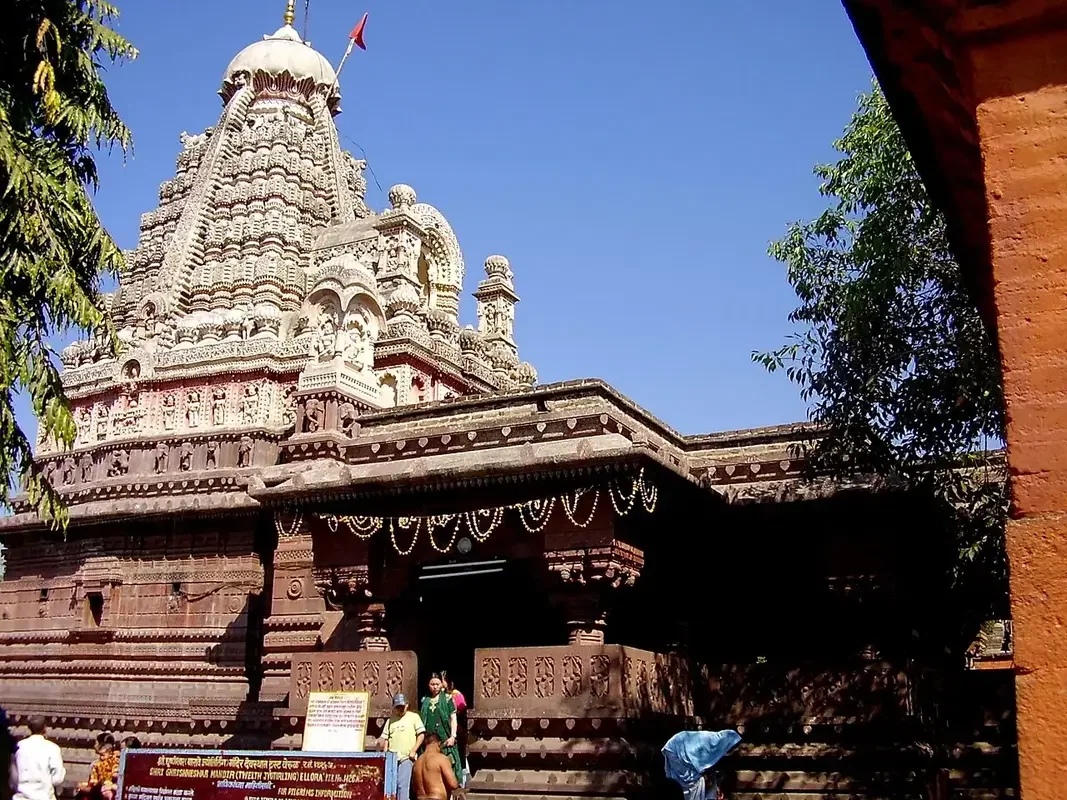
The temple is built of black stone and covers an area of 44,000 sq ft. Its inner and outer walls carry many sculptures and finely carved designs. The Jyotirlinga is enshrined in the inner sanctum, the garbhagriha. In front of the main door sits a large image of Nandi, Lord Shiva's beloved devotee and mount, who faces the Lord.
Daily seva timings
Indicative — confirm on the temple's official site before visiting
Indicative — confirm on the temple's official site before visiting
Offerings & festivals
The main festival of the Jyotirlinga, drawing large crowds of devotees.
A major festival period with heavy crowds and longer temple hours.
How to reach
Chhatrapati Sambhajinagar (Aurangabad) Airport is the nearest, 37–40 km away.
Aurangabad Railway Station is the nearest railhead, 30 km from the temple.
The temple is 1.5 km from the Ellora Caves and 30 km north-west of Chhatrapati Sambhajinagar. Government buses run from Aurangabad and Pune.
-
Frequently asked questionsFAQs
Yes. General darshan is free for all devotees.
More temples in MaharashtraMore in Maharashtra
View all →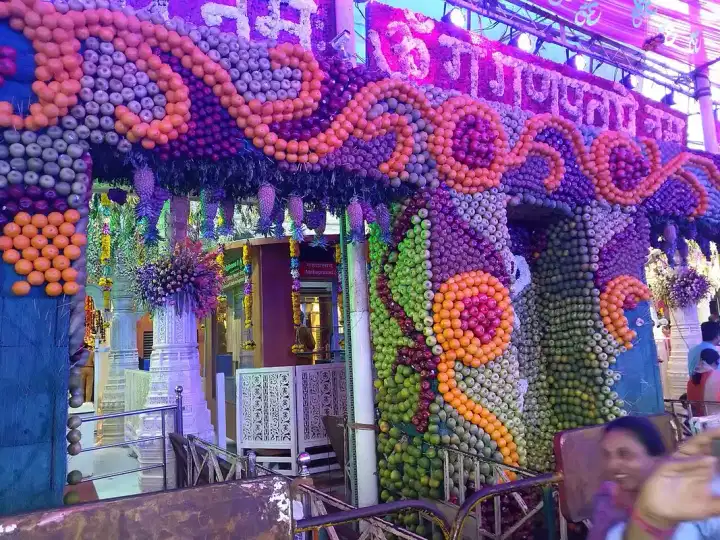
Shree Siddhivinayak Temple
Prabhadevi, MaharashtraPrabhadevi
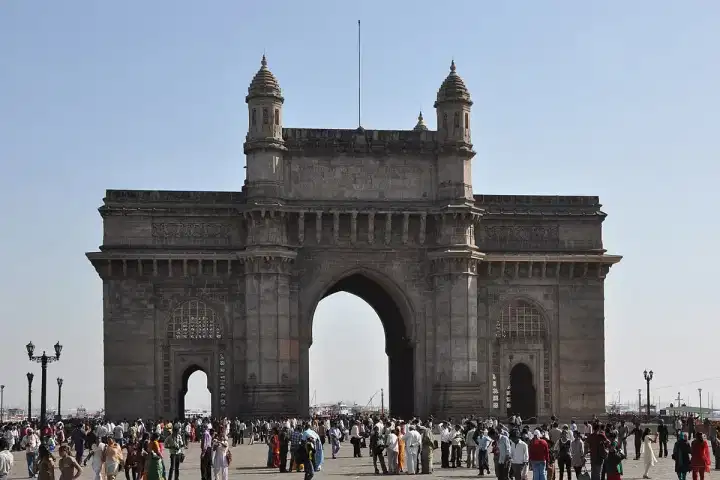
Mahalakshmi Temple, Mumbai
Mumbai, MaharashtraMumbai
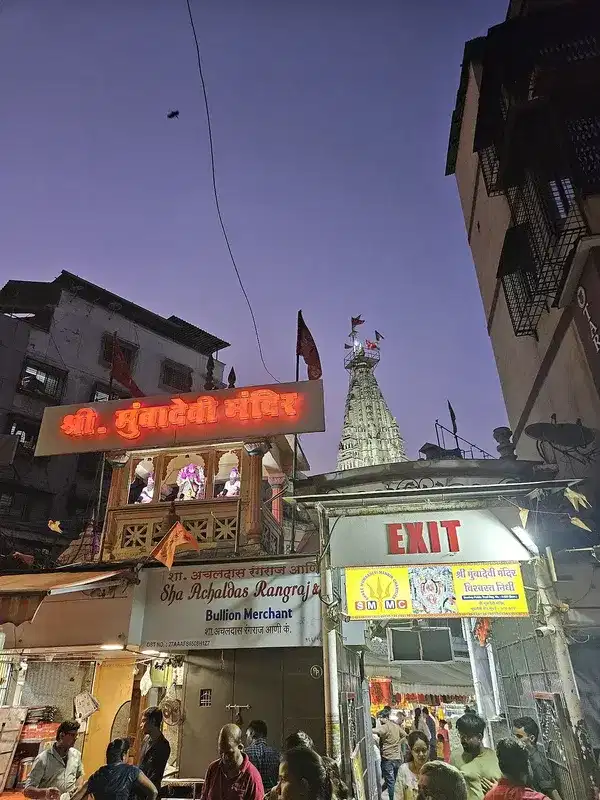
Mumba Devi Temple, Bhuleshwar
Bhuleshwar, Mumbai, MaharashtraBhuleshwar, Mumbai
Shri Saibaba Samadhi Mandir, Shirdi
Shirdi, MaharashtraShirdi
Recommended Pujas
View all pujas →View allThis information is for awareness only. This temple is not a Vedamandir partner temple.