


Kheer Bhawani Temple
The beloved spring shrine of Goddess Ragnya Devi in Tulmulla, Ganderbal, 25 km from Srinagar
Tulmulla, Ganderbal, Jammu & Kashmir

Open daily for darshan · 6:00 AM to 8:00 PM
- General Darshan
- Free
- Dress code
- Dress modestly, with shoulders and legs covered. Remove your footwear before entering the inner sanctum.
- Best season
- -
About the temple
Kheer Bhawani Temple, also called Ksheer Bhawani or the Ragnya Devi temple, stands in the village of Tulmulla in Ganderbal district, 25 km northeast of Srinagar. The Goddess is worshipped in the form of a sacred spring, and a small shrine rises from the middle of its waters, shaded by chinar trees. She is known by many names, including Ragnya and Rajna, with titles such as Devi, Mata and Bhagavati. Her popular name comes from kheer, the milk-and-rice pudding offered to please her, which is why she is sometimes called the 'Milk Goddess'. Hindu Kashmiris widely worship her as their Kuladevi, the protective deity of the family, and the Chandraseniya Kayastha Prabhu community also honours her as their Kuladevi.
Significance
For Kashmiri Pandits, this is the most important place of pilgrimage. Devotees believe that the colour of the spring's water changes to reflect the mood of the Goddess. The shrine finds mention in Kalhana's Rajatarangini and in the Bhrigu Samhita. According to temple lore, the Goddess appeared in a dream to Yogi Krishna Pandit Taploo of Srinagar and showed him where the holy spring lay. The priests of this temple never left it, even during the years of serious threats.
History
- 1Ancient · Mentioned in Rajatarangini
Kalhana's Rajatarangini and the Bhrigu Samhita refer to the Goddess and the sacred spring of Tula Mula.
- 219th century · Dharamshala built
Maharaja Ranbir Singh built the first dharamshala for pilgrims at the site.
- 31912 · Present temple built
The spring, pond and temple were built under Maharaja Pratap Singh.
- 420th century · Renovation
Maharaja Hari Singh carried out renovation work at the temple.
- 51990s · Mela disrupted and restored
The annual mela was hit by militancy and the exodus, then revived with security support.
Architecture
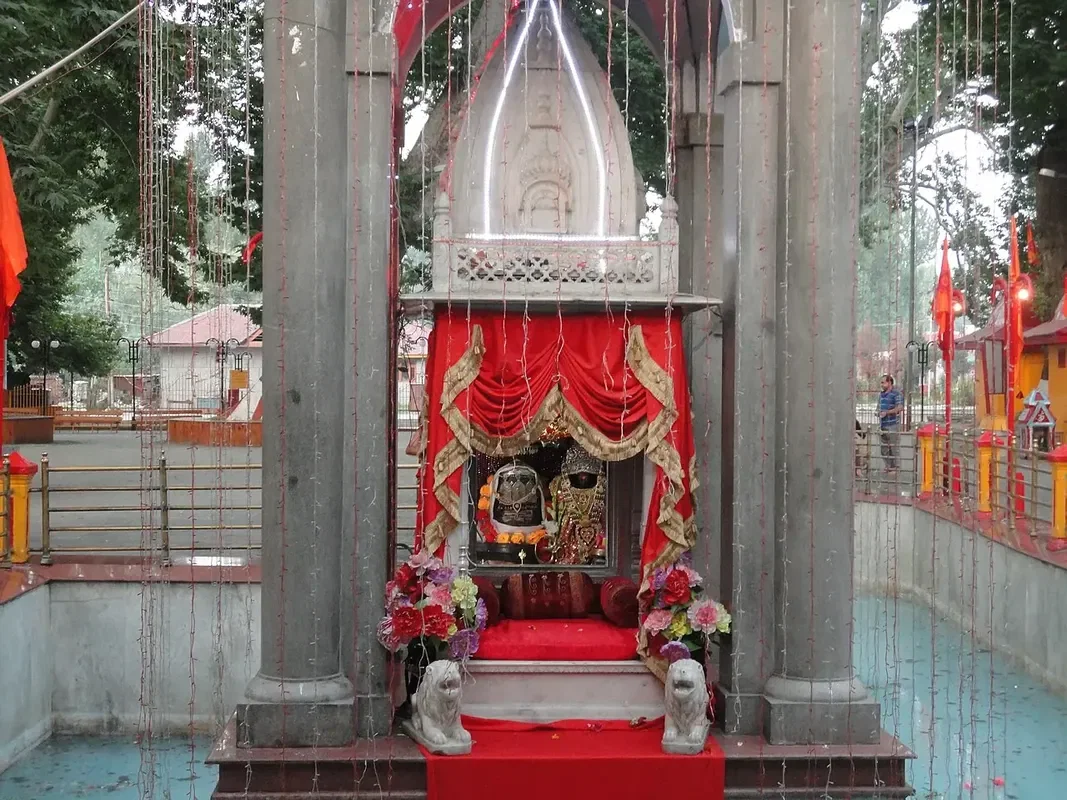
The temple is built around a seven-sided (heptagonal) sacred spring and pond. A small shrine in traditional Hindu style sits at the centre of the spring, with chinar trees all around. The Dogra Maharajas shaped much of the complex: Maharaja Pratap Singh had the spring, pond and temple built in 1912, and Maharaja Hari Singh later renovated it.
Daily seva timings
Indicative — confirm on the temple's official site before visiting
Indicative — confirm on the temple's official site before visiting
Offerings & festivals
The year's biggest gathering, drawing Kashmiri Pandits along with other pilgrims and visitors.
How to reach
Srinagar Airport is the nearest airport; the temple is 25 km northeast of Srinagar.
Srinagar is the nearest railway station.
Tulmulla village in Ganderbal is 25 km from Srinagar by road, reachable by taxi.
-
Frequently asked questionsFAQs
Yes. General darshan is free for all visitors, and donations are welcome.
More temples in Jammu & KashmirMore in Jammu & Kashmir
View all →
Recommended Pujas
View all pujas →View allThis information is for awareness only. This temple is not a Vedamandir partner temple.