


Shri Amarnath Cave Shrine
High-altitude cave shrine in Kashmir, open to pilgrims only during the summer yatra in the month of Shravana
Amarnath, Anantnag, Jammu & Kashmir

-
- Darshan
- -
- Dress code
- There is no formal religious dress code. Wear warm, weatherproof clothing, such as woollens, a waterproof jacket and trekking shoes, for the high-altitude trek and sub-zero cold.
- Best season
- July–August (yatra period, Shravana)
About the temple
Shri Amarnath Cave Shrine is a natural cave high in the Himalayas, in the Pahalgam tehsil of Anantnag district in Jammu and Kashmir. It sits at 3,888 metres, around 141 km from Srinagar. It can be reached from base camps at Pahalgam or Baltal. Inside the cave, an ice stalagmite forms on its own and is worshipped as a lingam of Lord Shiva. The shrine is not a built temple. Legend credits a shepherd, Buta Malik, with rediscovering the cave. The Malik family and local priests cared for it for generations, and since 2000 it has been managed by the Shri Amarnathji Shrine Board. Pilgrims can visit only during the annual Amarnath Yatra. The yatra opens in early July, lasts about 45 days, and ends on Shravana Purnima.
Significance
Amarnath is counted among the holiest Shiva shrines in Hinduism. Devotees believe this is the cave where Lord Shiva told Goddess Parvati the secret of immortality, the Amar Katha. The ice lingam that forms inside the cave is worshipped as Shiva himself. Old accounts describe it growing and shrinking with the seasons and the moon. The yatra peaks on Shravana Purnima, the day of Raksha Bandhan. The journey ends with the Chhari Mubarak, the procession of Shiva's holy mace.
History
- 111th century · Queen Suryamati's gifts
Queen Suryamati offered tridents, banalingas and other sacred emblems to the shrine.
- 21148–49 CE · Named in the Rajatarangini
Kalhana's chronicle of Kashmir calls the shrine Amareshvara and mentions its yatra and Sheshnag Lake.
- 316th century · Described in Ain-i-Akbari
Abu'l Fazl wrote of the ice image, its many pilgrims and how it waxed and waned with the moon.
- 41663 · Bernier's account
French physician François Bernier, travelling with Aurangzeb, wrote of a grotto full of ice formations.
- 51898 · Swami Vivekananda's visit
Swami Vivekananda visited the cave, as recorded by Sister Nivedita.
- 62000 · Shrine Board formed
The Shri Amarnathji Shrine Board was set up to manage the shrine and the yatra.
Architecture
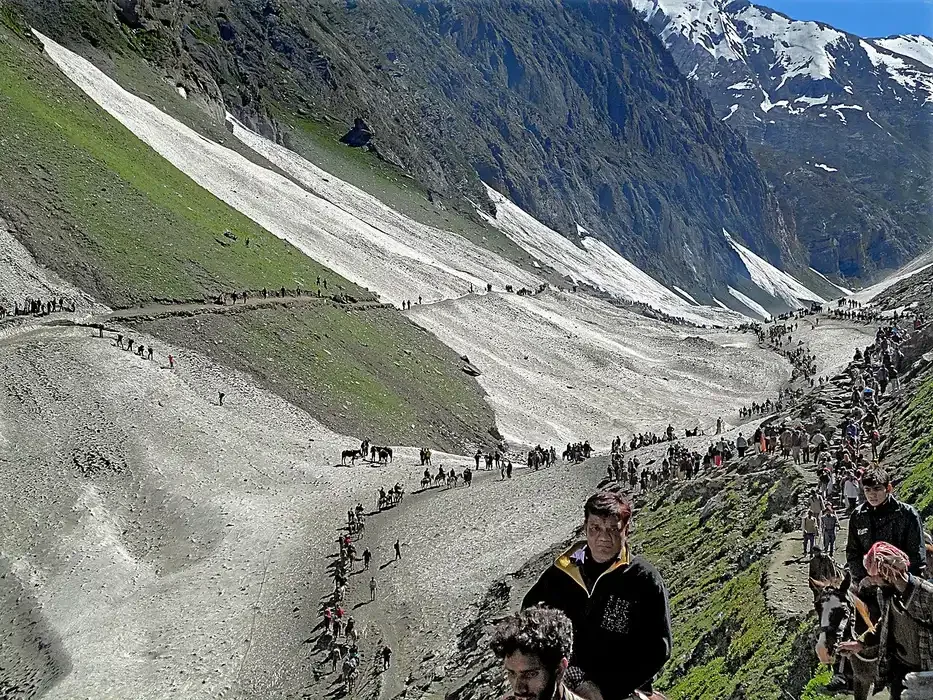
Amarnath has no built temple. The shrine is a natural cave in the Himalayas at 3,888 metres. Water drips from the cave roof and freezes into an ice stalagmite, which devotees worship as a lingam of Shiva. Historical writers noted that the lingam grows and shrinks with the seasons and the phases of the moon. The cave is snowbound for most of the year and opens to pilgrims only during the yatra.
Daily seva timings
-
-
Offerings & festivals
The annual 45-day pilgrimage to the cave, opening with the pratham pujan.
Peak day of the yatra on Raksha Bandhan, ending with the holy mace procession.
How to reach
Srinagar International Airport is the nearest airport. The cave is around 141 km from Srinagar.
Jammu–Baramulla line: get off at Srinagar for the north route or Anantnag for the south route.
Roads and taxis reach the base camps at Pahalgam/Chandanwari or Baltal.
North route: about 13 km, steep, from Baltal. South route: about 43 km from Pahalgam via Chandanwari, Sheshnag and Panchtarni.
Frequently asked questionsFAQs
Yes, darshan is free. You must register for the yatra through the Shri Amarnathji Shrine Board, and a permit, RFID card and health certificate are required.
More temples in Jammu & KashmirMore in Jammu & Kashmir
View all →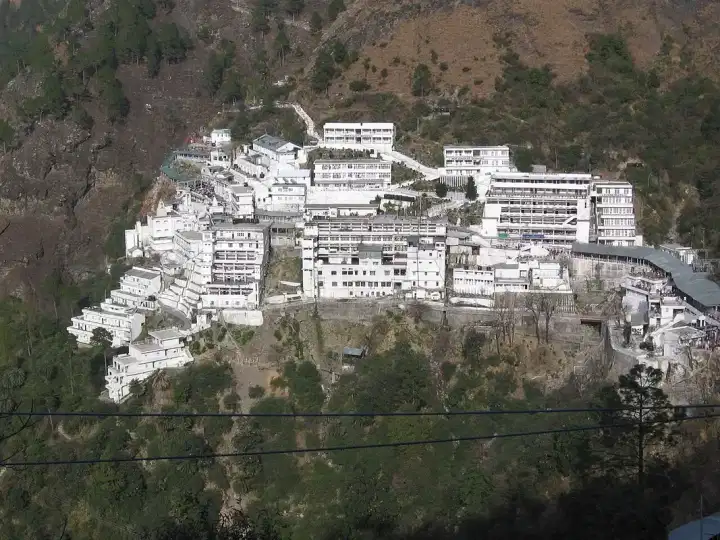
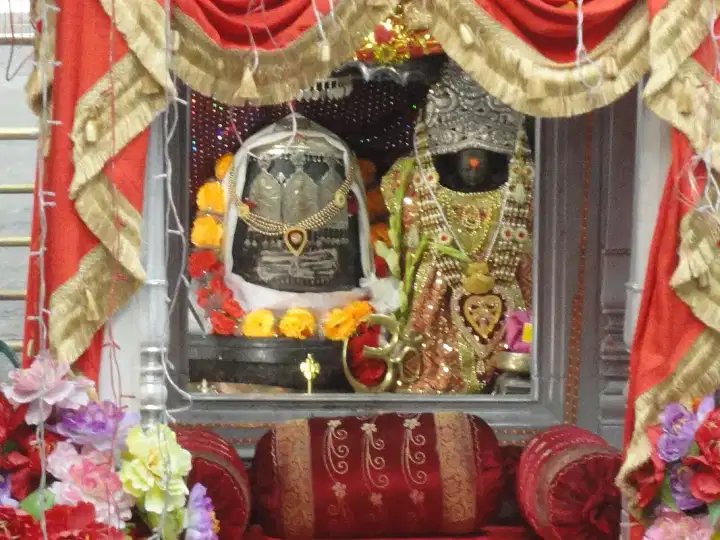
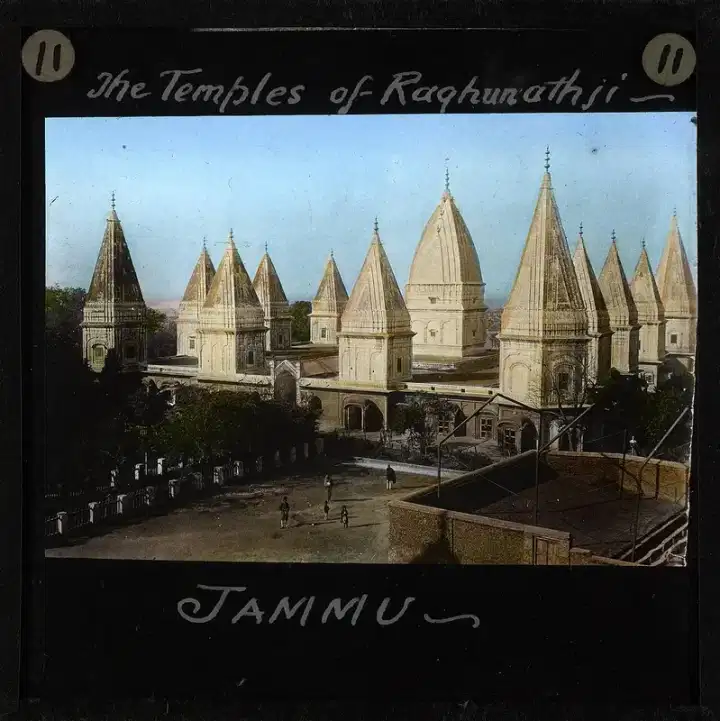
Recommended Pujas
View all pujas →View allThis information is for awareness only. This temple is not a Vedamandir partner temple.