


Maa Mundeshwari Temple
Hilltop shrine of Devi Mundeshwari and the Chaturmukh Shiva linga on the Kaimur plateau in Bihar
Kaura, Kaimur, Bihar

Open daily · 5:00 AM to 9:00 PM
- General darshan
- Free
- Dress code
- -
- Best season
- -
About the temple
Maa Mundeshwari Temple stands 185 metres up on the Mundeshwari Hills of the Kaimur plateau, close to the Son River in Bihar's Bhojpuri region. Devotees honour it as one of the oldest surviving Hindu temples in India. Shiva and Shakti are worshipped together here. A rare four-faced Chaturmukh Shiva linga sits at the centre of the sanctum. Devi Mundeshwari, the presiding goddess, is enshrined in a wall niche as Mahishasuramardini. The small stone shrine has an unusual octagonal plan. It has been a centrally protected monument under the Archaeological Survey of India since 1915, and the Bihar State Religious Trust Board is also linked to the site. It is a major pilgrimage place in Bihar, especially during Navaratra.
Significance
The temple brings Shiva and Shakti together in one sanctum. Devi Mundeshwari is worshipped as the ten-armed goddess riding a buffalo, the slayer of Mahishasura. Beside her stands the Chaturmukh Shiva linga, a four-faced form seldom seen elsewhere. Pilgrims have come to this hill for many centuries. A royal seal of a Sri Lankan king found here shows that devotees once travelled from far beyond India. Navaratra fairs and Maha Shivratri draw the biggest crowds.
History
- 1c. 570–590 CE · Udayasena inscription
An inscription naming Maharaja Udayasena mentions religious establishments already active on the hill.
- 2636–638 CE · Hiuen Tsang's account
The Chinese traveller describes a shining hilltop shrine to the southwest of Patna.
- 316th–17th century · Octagonal shrine rebuilt
The present shrine was rebuilt using doorways and mouldings saved from older 7th-century temples.
- 4First portrait
Thomas and William Daniell visit the temple and make the first known picture of it.
- 51915 · ASI protection
The temple becomes a protected monument under the Archaeological Survey of India.
- 6Sri Lankan seal found
A Brahmi seal of King Dutthagamani is found, showing pilgrims came here from as far away as Sri Lanka.
Architecture
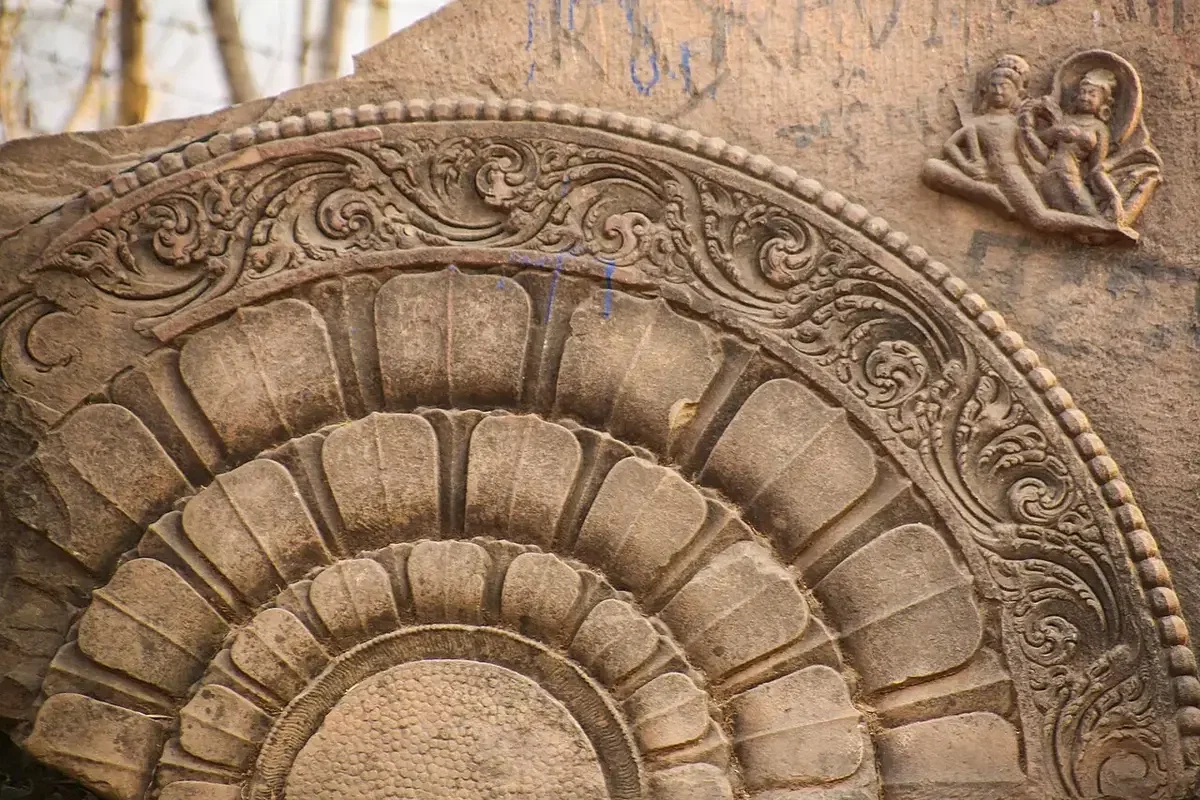
Built of stone on a rare octagonal plan, the temple is the earliest example of Nagara-style architecture in Bihar. Four sides have doors or windows, and the other four walls have niches for images. The original shikhara is gone and a roof was added during renovation. Inside, bold mouldings carry vase and foliage carvings. The entrance door jambs show Dvarapalas, Ganga and Yamuna. Images of Ganesha, Surya and Vishnu are also found, along with two stone vessels of unusual design.
Daily seva timings
As published on the temple's official site
As published on the temple's official site
Offerings & festivals
An annual fair gathers pilgrims to honour Devi Mundeshwari
Large crowds offer abhishek on the Chaturmukh Shiva linga
Celebrated at the temple
A state cultural festival held in the temple's name
How to reach
Varanasi airport is the nearest, about 102 km away by road.
Mohania (Bhabua Road) station is 22 km away. Taxis, autos and buses run on to the temple.
The temple is on a hilltop at Kaura in Kaimur district. The Bihar government has improved road access, and it can be reached by road from Patna and Gaya.
-
Frequently asked questionsFAQs
The temple is open daily from 5:00 AM to 9:00 PM.
More temples in BiharMore in Bihar
View all →
Recommended Pujas
View all pujas →View allThis information is for awareness only. This temple is not a Vedamandir partner temple.