


Shri Ram Janmabhoomi Mandir, Ayodhya
Free darshan of Ram Lalla at the temple built on Ram Janmabhoomi in Ayodhya, Uttar Pradesh
Ayodhya, Ayodhya, Uttar Pradesh

Free darshan slots 07:00–20:30 · Mangal Aarti to Shayan Aarti
- Free Sugam Darshan pass
- Free
- Aarti pass (Mangal/Shringar/Shayan)
- Free
- Dress code
- -
- Best season
- -
About the temple
Shri Ram Janmabhoomi Mandir is a Hindu temple complex in Ayodhya, Uttar Pradesh, built at the spot many Hindus revere as the birthplace of Lord Rama. The presiding deity is Ram Lalla, Rama in his five-year-old child form, whose new idol was consecrated on 22 January 2024. The temple is managed by the Shri Ram Janmabhoomi Teerth Kshetra trust, and Larsen & Toubro carried out the construction. It is now one of the most visited temples in India. Darshan is free for every devotee, offered in slots through the day, and free passes are given for the Mangal, Shringar and Shayan aartis. The completion of the temple was marked on 25 November 2025, when the Dharma Dhwaja was raised atop it.
Significance
For many Hindus, Ayodhya is the birthplace of Rama, and this temple stands at the spot they hold as Ram Janmabhoomi. It has become one of contemporary India's foremost pilgrimage sites, built after a long legal and religious dispute that was settled by the Supreme Court in 2019. Devotees come to see Ram Lalla, the Lord as a young child. Ram Navami is the high point of the temple year, marked by a Surya Tilak ceremony at noon and longer darshan hours.
History
- 116th century · Babri Masjid built
Mir Baqi, a Mughal commander under Babur, built a mosque on the site.
- 21992 · Mosque demolished
The Babri Masjid was demolished on 6 December 1992.
- 32019 · Supreme Court verdict
The Supreme Court awarded the site for building the temple; land elsewhere was given for a mosque.
- 45 August 2020 · Bhumi Pujan
Construction formally began with a groundbreaking ceremony and a 40 kg silver foundation brick.
- 522 January 2024 · Prana Pratishtha
The new idol of Ram Lalla was consecrated in the sanctum.
- 625 November 2025 · Construction completed
The Dharma Dhwaja was hoisted atop the temple to mark completion.
Architecture
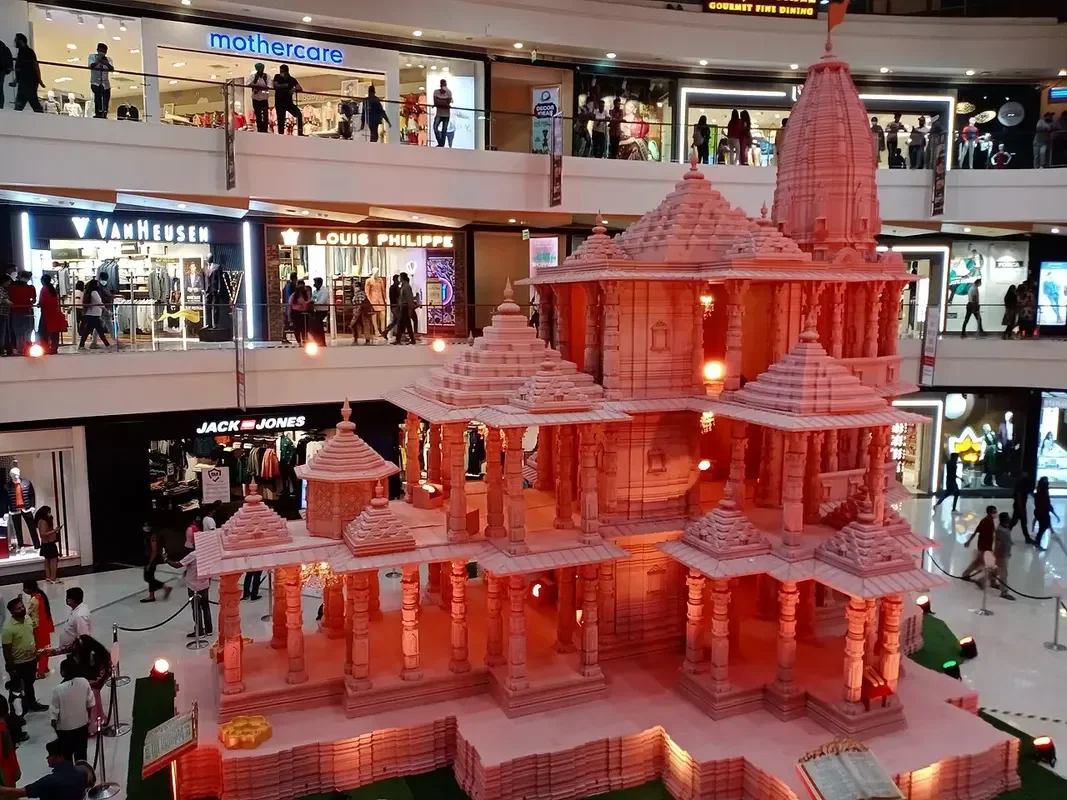
The temple was designed by the Sompura family of Ahmedabad, led by chief architect Chandrakant Sompura, in the Maru-Gurjara branch of the Nagara style. It is 161 feet high, 380 feet long and 250 feet wide, set on a raised three-storey platform with an octagonal sanctum, five mandapas and 366 carved columns. Shrines to Surya, Bhagwati, Ganesh and Shiv stand at the corners. Sandstone from Baansi in Rajasthan was used, and no iron or steel went into the structure.
Daily seva timings
As published on the temple's official site
As published on the temple's official site
Offerings & festivals
-
The main festival, with a noon Surya Tilak ceremony and extended darshan hours.
Ayodhya's grand festival of lamps at Diwali.
Celebrates Rama and Sita's wedding; the Dharma Dhwaja was raised on this day in 2025.
Swing festival held in the month of Sawan.
How to reach
The official page lists Gorakhpur Airport (118 km) and Lucknow Amausi Airport (125 km).
Ayodhya Junction (AY) and Faizabad Junction (FD).
UPSRTC buses run 24 hours. Ayodhya is 130 km from Lucknow, 200 km from Varanasi and 636 km from Delhi.
-
Frequently asked questionsFAQs
Yes. Darshan is free, and free Sugam Darshan passes can be booked up to 90 days ahead. Passes for the Mangal, Shringar and Shayan aartis are also free.
More temples in Uttar PradeshMore in Uttar Pradesh
View all →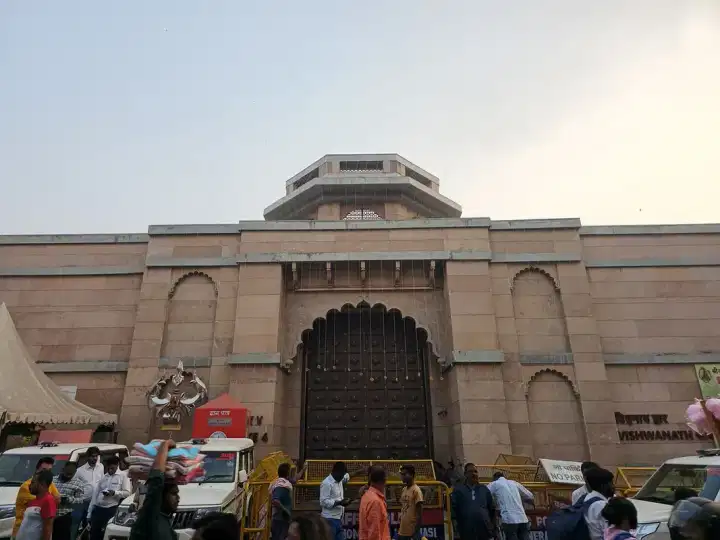
Shri Kashi Vishwanath Temple
Varanasi, Uttar PradeshVaranasi
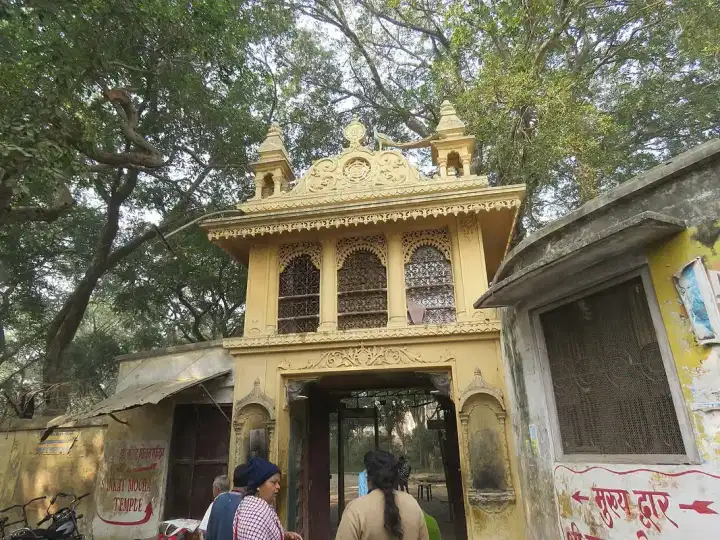
Sankat Mochan Hanuman Temple
Varanasi, Uttar PradeshVaranasi
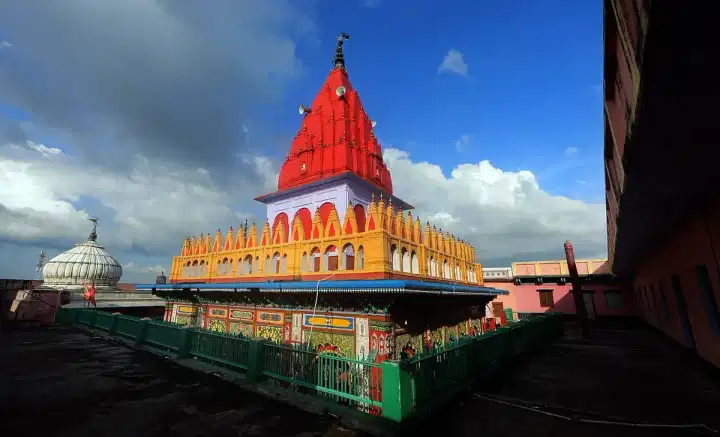
Hanuman Garhi Temple, Ayodhya
Ayodhya, Uttar PradeshAyodhya
Shri Krishna Janmabhoomi Temple
Mathura, Uttar PradeshMathura
Recommended Pujas
View all pujas →View allThis information is for awareness only. This temple is not a Vedamandir partner temple.