


Shri Vitthal Rukmini Mandir, Pandharpur
Home of Lord Vitthal and Goddess Rukmini, and the goal of the great Varkari Wari pilgrimage in Pandharpur.
Pandharpur, Solapur, Maharashtra

-
- General darshan
- Free
- Dress code
- Traditional clothing is expected. Men: dhoti-uparne or pajama-kurta. Women: saree or salwar-kameez. Both should wear an upper covering, and children should be fully covered.
- Best season
- -
About the temple
Shri Vitthal Rukmini Mandir in Pandharpur, in Maharashtra's Solapur district, is the main shrine of Lord Vitthal, also called Vithoba or Panduranga, and his consort Goddess Rukmini. Devotion to Vithoba first grew in Karnataka and later took root in Pandharpur. An inscription in the temple from 1189 marks the first small shrine on this spot, and a fuller temple rose over it between 1273 and 1277. From the 1200s onward, saint-poets such as Jnaneshwar, Namdev, Eknath and Tukaram made Vithoba central to the bhakti movement. Today the temple is the spiritual centre of the Varkari tradition, and huge crowds of pilgrims arrive on Ashadhi and Kartiki Ekadashi. In May 2014 it became the first temple in India to invite women and people from backward castes to serve as priests.
Significance
For Varkari devotees, Pandharpur is the meeting place with their beloved Vithoba. Tradition holds that the Lord came here for the sake of Pundalika, and later tellings say Vithoba was so moved by Pundalika's devotion to his parents that he chose to stay. The saint-poets of Maharashtra sang of Vithoba for centuries, and their songs still guide the pilgrims. The Ashadhi Ekadashi Wari is the largest Varkari pilgrimage, and Kartiki Ekadashi is the second great gathering.
History
- 11189 · First shrine
A temple inscription records a small Vithoba shrine set up on the present site.
- 21237 · Royal grant and gateway
Hoysala king Vira Someshwara granted a village for upkeep, and a temple gateway was built.
- 31273–1277 · Temple built
Inscriptions record a temple to Vithoba raised over the earlier shrine.
- 417th century · Present structure
Most of the temple seen today dates from this time or later, in the later Deccan style.
- 5May 2014 · Inclusive priesthood
Became the first temple in India to invite women and backward-caste people as priests.
Architecture
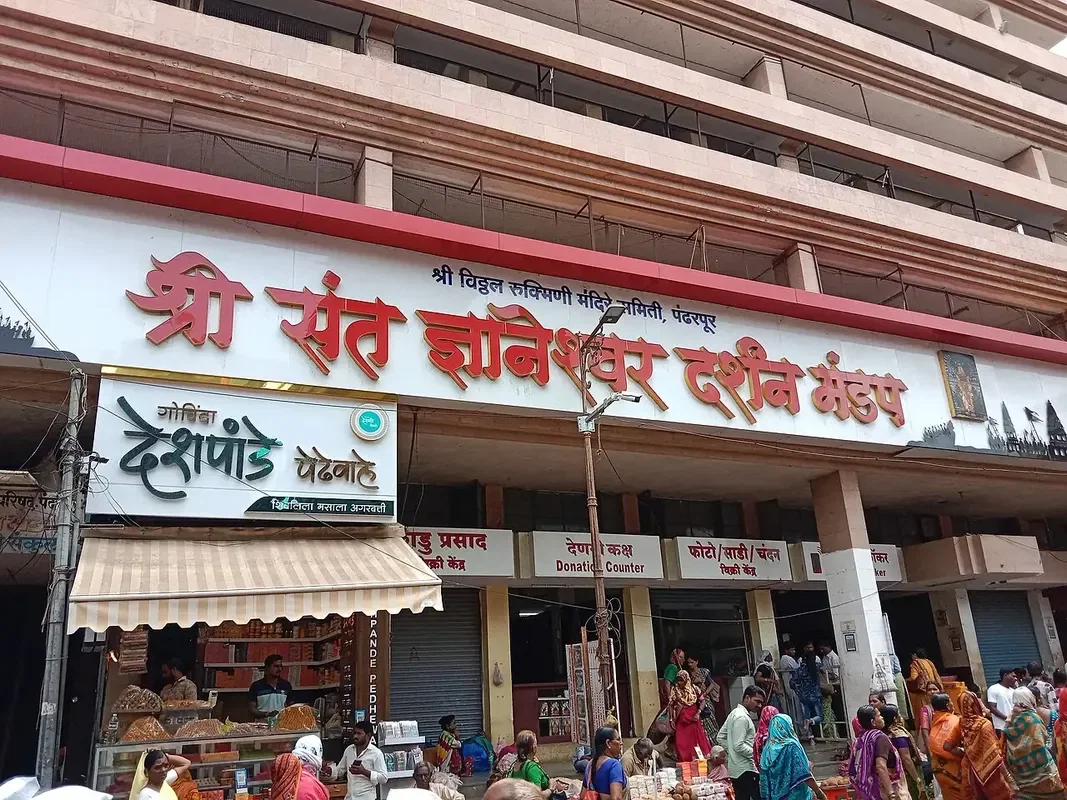
The temple holds layers from different centuries. Some parts go back to the 12th or 13th century, when the first shrine and then a fuller temple stood here, along with a gateway built in 1237. Most of the building devotees walk through today, though, dates from the 17th century or later. This later work follows the Deccan style, seen in its dome motifs and lobed arches.
Daily seva timings
-
-
Offerings & festivals
-
The largest Varkari pilgrimage (Wari), held in the month of Ashadha.
The second great pilgrimage of the year, in Kartika.
Celebrated after Holi.
Festival of Lord Krishna's birth.
How to reach
The nearest airports are at Solapur and Pune.
The nearest railway station is Solapur, about 74 km away.
Pandharpur has its own bus station; local taxis and autos run from there to the temple.
-
Frequently asked questionsFAQs
Yes, general darshan at the temple is free.
More temples in MaharashtraMore in Maharashtra
View all →
Shree Siddhivinayak Temple
Prabhadevi, MaharashtraPrabhadevi
Mahalakshmi Temple, Mumbai
Mumbai, MaharashtraMumbai
Mumba Devi Temple, Bhuleshwar
Bhuleshwar, Mumbai, MaharashtraBhuleshwar, Mumbai
Shri Saibaba Samadhi Mandir, Shirdi
Shirdi, MaharashtraShirdi
Recommended Pujas
View all pujas →View allThis information is for awareness only. This temple is not a Vedamandir partner temple.