


Umananda Temple
Lord Shiva's island shrine in the middle of the Brahmaputra, reached by boat from Guwahati
Guwahati, Kamrup Metropolitan, Assam

Open daily · 5:30 AM to 6:00 PM
- Free general darshan
- Free
- Dress code
- Traditional and formal clothing is expected.
- Best season
- -
About the temple
Umananda Temple, also known as Umananda Devaloi, is a shrine to Lord Shiva on Peacock Island (Umananda Island) in the middle of the Brahmaputra river at Guwahati, Assam. Devotees cross the river by country boat or ferry from Kachari Ghat or Uzanbazar Ferry Ghat. From the island jetty they climb more than 150 steps, or take a ropeway, to reach the main shrine. The brick temple was built in 1694 CE on the orders of the Ahom king Gadadhar Singha. It was rebuilt after the great earthquake of 1897. Besides Lord Shiva, the shrines hold images of ten other Hindu deities. The island also keeps old rock-cut carvings of Ganesha and other gods. General darshan is free, and the boat ride is paid for separately.
Significance
The Kalika Purana links this hillock with Shiva in his form as Bhayananda. It tells that at the start of creation Shiva scattered sacred ash here and taught Parvati divine knowledge. When Kamadeva broke Shiva's meditation on this hill, Shiva's anger burned him to ashes. This gave the hill its name Bhasmacala, also called Bhasmakuta. The same text places Urvasikunda here. It is the home of the goddess Urvasi, who brings nectar for Goddess Kamakhya. Devotees come in large numbers on Amavasya and Maha Shivaratri.
History
- 1Post-Gupta period · Early stone temple
Remains on the site show a stone temple stood here in the post-Gupta period.
- 2Early medieval period · Rock-cut sculptures
Stone carvings, a four-armed female figure, rock-cut Ganesha images and a cave date from this era.
- 31694 CE · Brick temple built
The Bar Phukan Garhganya Handique built the temple on the orders of Ahom king Gadadhar Singha.
- 41897 CE · Earthquake damage
A devastating earthquake badly damaged the original temple.
- 5After 1897 · Temple rebuilt
A wealthy local merchant rebuilt the temple and had Vaishnavite lines inscribed inside.
Architecture
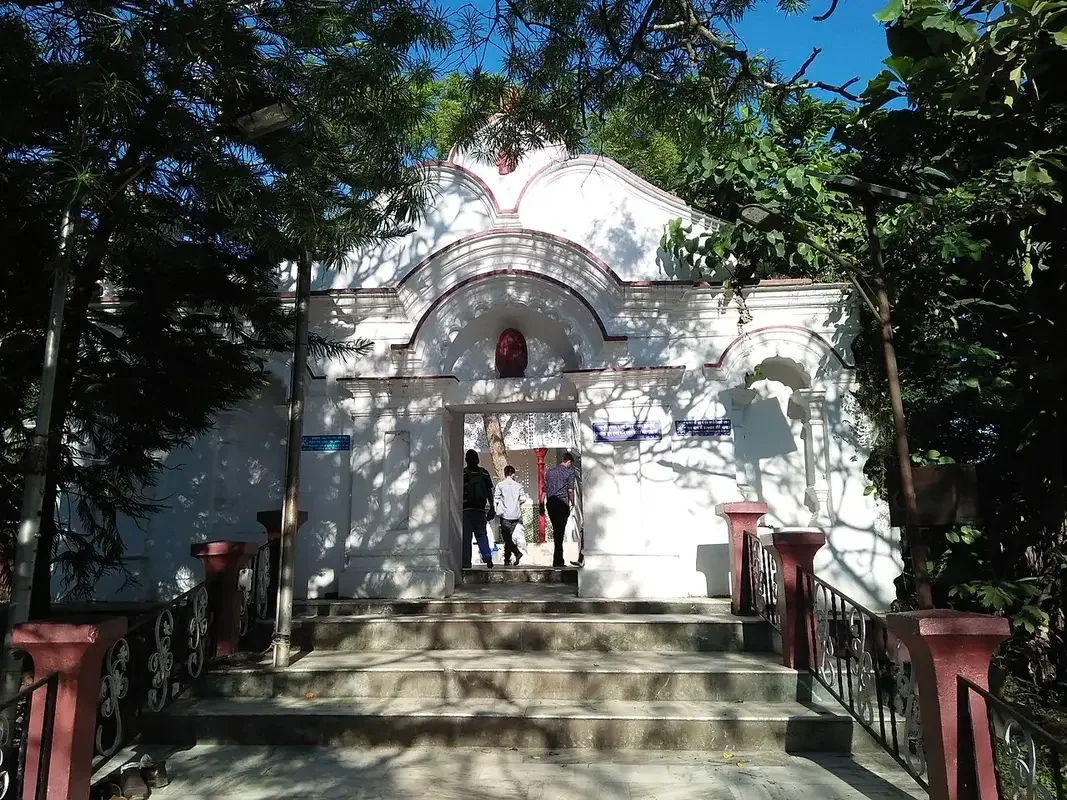
A flight of steep steps leads up to the main shrine. Besides Lord Shiva, the temple houses idols of ten other Hindu gods. There are images of Surya, Ganesha, Shiva and Devi, who bears a scorpion as her emblem. Vishnu and his ten avatars also appear, showing that worshippers here honoured all the main Hindu deities. Older rock-cut figures, a four-armed female stone figure and a cave survive on the island. Inside the rebuilt Shiva temple are Vaishnavite inscriptions.
Daily seva timings
Indicative — confirm on the temple's official site before visiting
Indicative — confirm on the temple's official site before visiting
Offerings & festivals
-
The temple's main festival, celebrated widely by Shiva devotees
The annual temple festival, widely celebrated on the island
How to reach
-
Guwahati railway station is about a 15-minute walk from the nearest ferry point.
Take a country boat or ferry from Kachari Ghat (opposite the Deputy Commissioner's office) or Uzanbazar Ferry Ghat to Peacock Island.
From the island jetty, climb over 150 steps (or take the ropeway) up to the temple.
Frequently asked questionsFAQs
Yes, general darshan is free. You will need to pay separately for the ferry or boat ride to Peacock Island.
More temples in AssamMore in Assam
View all →
Recommended Pujas
View all pujas →View allThis information is for awareness only. This temple is not a Vedamandir partner temple.