


Brahma Temple, Pushkar
Home of the four-faced Lord Brahma, beside the sacred Pushkar Lake in Rajasthan
Pushkar, Ajmer, Rajasthan

Morning and evening darshan · closed 13:30–15:00
- Darshan
- -
- Dress code
- Wear modest clothes with shoulders and knees covered, for both men and women. Remove footwear before entering the temple.
- Best season
- -
About the temple
The Brahma Temple stands in the holy town of Pushkar in Rajasthan's Ajmer district, close to the sacred Pushkar Lake. It is one of the very few temples in India devoted to Lord Brahma, the creator, and the most prominent among them. Devotees lovingly call him Jagatpita, the father of the world. Inside, a life-size marble image shows the four-faced Brahma seated, with Gayatri at his left and Sarasvati at his right. Pushkar is filled with temples, and this is the most important of them all. Pilgrims bathe in the lake and then climb the marble steps for darshan. The largest crowds arrive around Kartik Purnima, when the Pushkar Fair fills the town.
Significance
The Padma Purana links this temple to the birth of Pushkar itself. Brahma struck down the demon Vajranabha with a lotus, and its petals fell in three places, forming three lakes. At the main lake he chose to hold a great fire sacrifice. His wife Savitri was delayed, so Brahma married Gayatri to complete the ritual. When Savitri arrived, she cursed him never to be worshipped, then softened the curse to allow his worship at Pushkar. This is why the temple is so rare and so deeply honoured.
History
- 1718 CE · Marble murti consecrated
By tradition, Adi Shankara installed the four-faced marble image of Brahma in the sanctum.
- 214th century · Present temple built
The temple structure that devotees visit today dates to the 14th century.
- 31658–1707 · Damage in Aurangzeb's reign
Many temples of Pushkar were damaged during Aurangzeb's rule and were rebuilt afterwards.
- 4Later period · Repairs by Maharaja Jawat Raj
Maharaja Jawat Raj of Ratlam made additions and repairs while keeping the original design.
Architecture
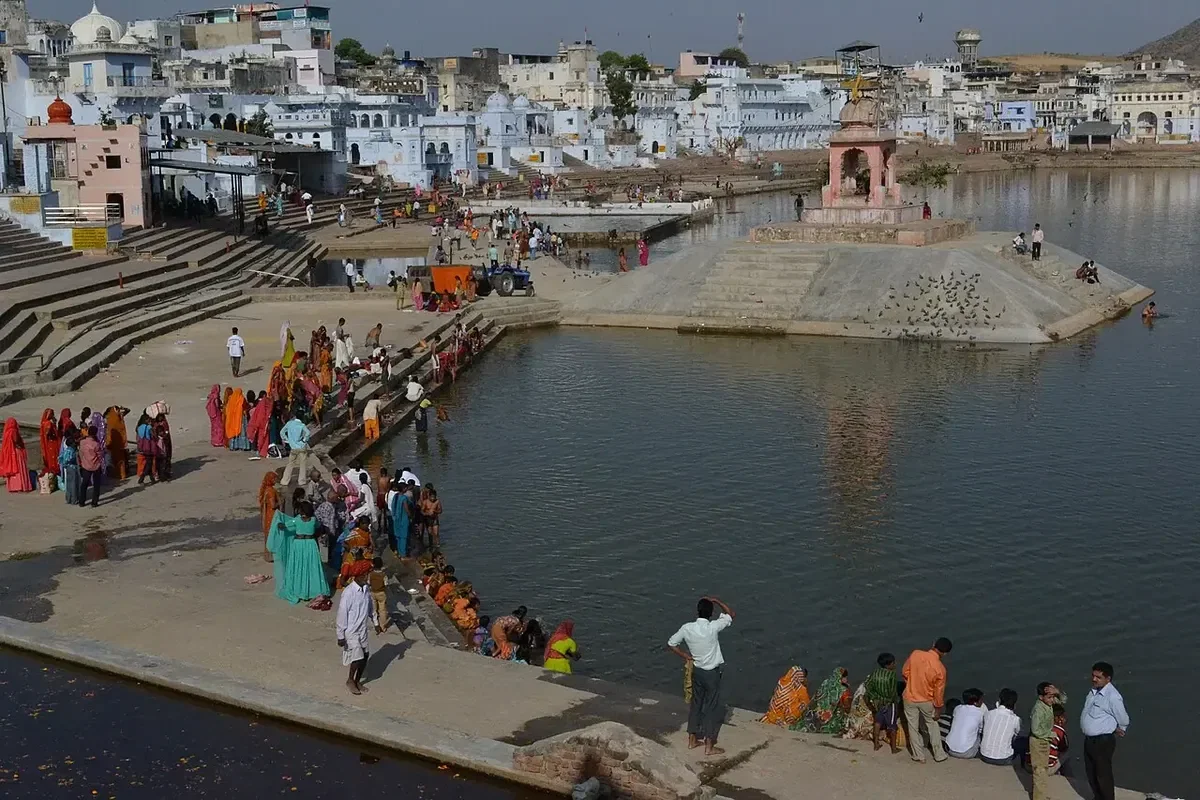
The temple rises on a high plinth, reached by marble steps leading to an arched gateway with pillared canopies. Its stone blocks are joined with molten lead. A red spire, about 21 m tall, and the hamsa, Brahma's swan, mark the shrine. A pillared hall leads to the sanctum, and a silver turtle on the floor faces the deity. The black-and-white marble floor and walls hold hundreds of silver coins offered by devotees. Images of Vishnu, gate-keepers and a gilded Garuda also adorn the temple.
Daily seva timings
Indicative — confirm on the temple's official site before visiting
Indicative — confirm on the temple's official site before visiting
Offerings & festivals
Brahma's annual festival with a holy dip in Pushkar Lake and the Pushkar Camel Fair alongside
Special rites performed on full-moon and new-moon days
How to reach
Kishangarh Airport is the nearest, 45 km away. Jaipur airport is 150 km away.
Ajmer railway station is the nearest major station, linked to Pushkar by the Pushkar road.
Pushkar lies northwest of Ajmer on the Pushkar road and 150 km southwest of Jaipur.
The temple is 1.5 km from Pushkar bus stand, an easy walk or a short cycle-rickshaw ride.
Frequently asked questionsFAQs
Yes. General darshan is free and there is no entry fee. Online darshan booking is not available.
More temples in RajasthanMore in Rajasthan
View all →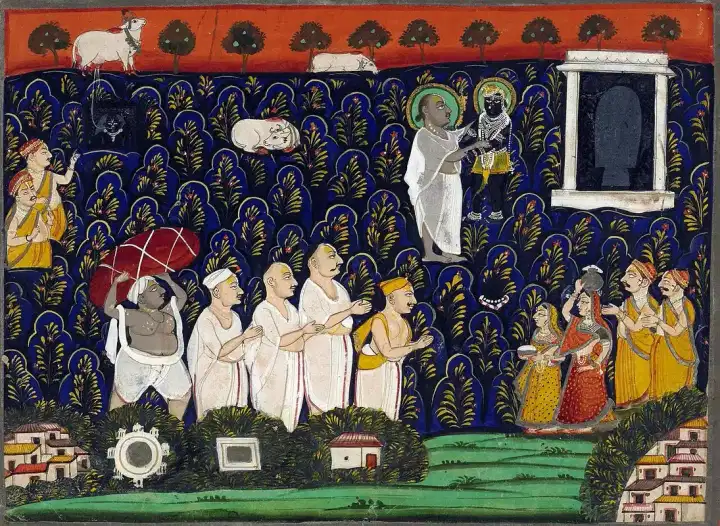
Shrinathji Temple, Nathdwara
Nathdwara, RajasthanNathdwara
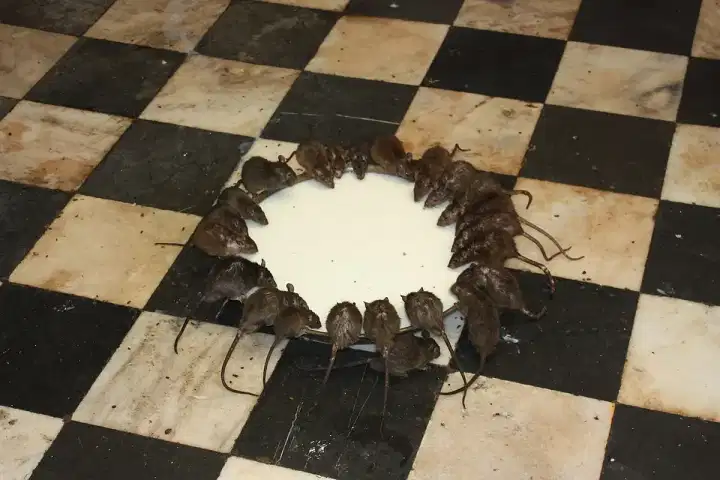
Karni Mata Temple, Deshnoke
Deshnoke, RajasthanDeshnoke
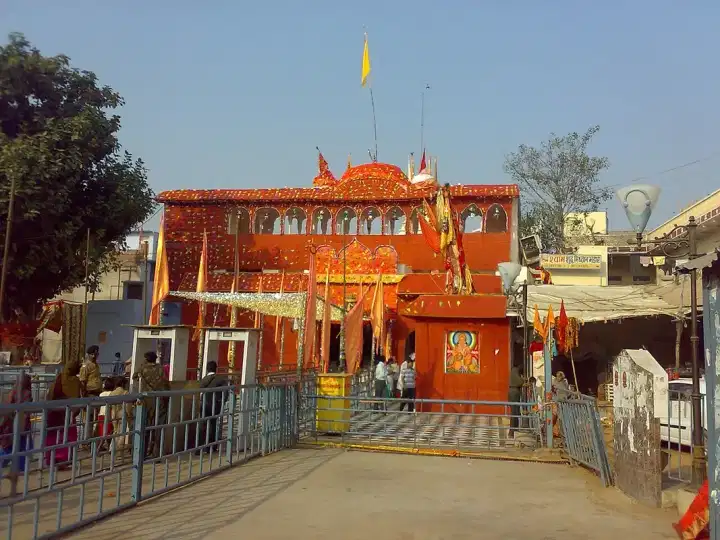
Khatu Shyam Ji Temple
Khatu, RajasthanKhatu
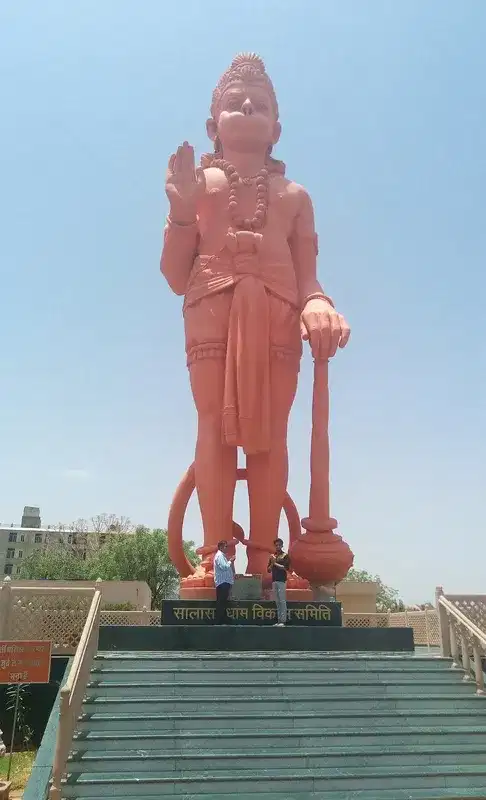
Salasar Balaji Temple
Salasar, RajasthanSalasar
Recommended Pujas
View all pujas →View allThis information is for awareness only. This temple is not a Vedamandir partner temple.