


Chandi Devi Temple, Haridwar
Goddess Chandi's shrine atop Neel Parvat in the Sivalik Hills, reached by ropeway or a 3 km climb.
Haridwar, Haridwar, Uttarakhand

Open 06:00 to 20:00 daily · Morning aarti at 05:30
- Free darshan
- Free
- Dress code
- Wear modest, traditional clothing. Leather accessories, non-vegetarian food and alcohol are strictly not allowed in the temple premises.
- Best season
- -
About the temple
Chandi Devi Temple is dedicated to Goddess Chandi and crowns Neel Parvat, the eastern summit of the Sivalik Hills above the holy city of Haridwar. The Sivaliks are the southernmost range of the Himalayas, and the shrine stands at 884 metres. The present temple was built in 1929 by Suchat Singh, King of Kashmir. Devotees believe the main murti of the Goddess was installed much earlier, in the 8th century CE, by Adi Shankaracharya. The temple is also called Neel Parvat Teerth and is one of the Panch Tirth of Haridwar. Pilgrims reach it either by the Udan Khatola ropeway or by a stepped trekking path of about 3 km from Chandighat. Common offerings include coconuts, flowers, dry fruits, roasted gram and a chunri for the Goddess.
Significance
The Skanda Purana links this hill to Goddess Chandi's victory over Chanda and Munda, the army chiefs of the demon kings Shumbha and Nishumbha. The place takes its name from her. Local tradition calls the mountain's twin peaks Shumbha and Nishumbha. Chandi Devi is one of Haridwar's three Siddh Peethas, along with Mansa Devi and Maya Devi, and one of the city's Panch Tirth. Devotees come here to seek the Goddess's protection and blessings.
History
- 18th century CE · Murti installed
Devotees believe Adi Shankaracharya installed the main murti of Goddess Chandi.
- 216th century · Akbar's land grant
Local legend tells that Emperor Akbar gave the temple its land after failing to move the Goddess's idol.
- 31929 · Present temple built
Suchat Singh, King of Kashmir, built the present temple structure.
Architecture
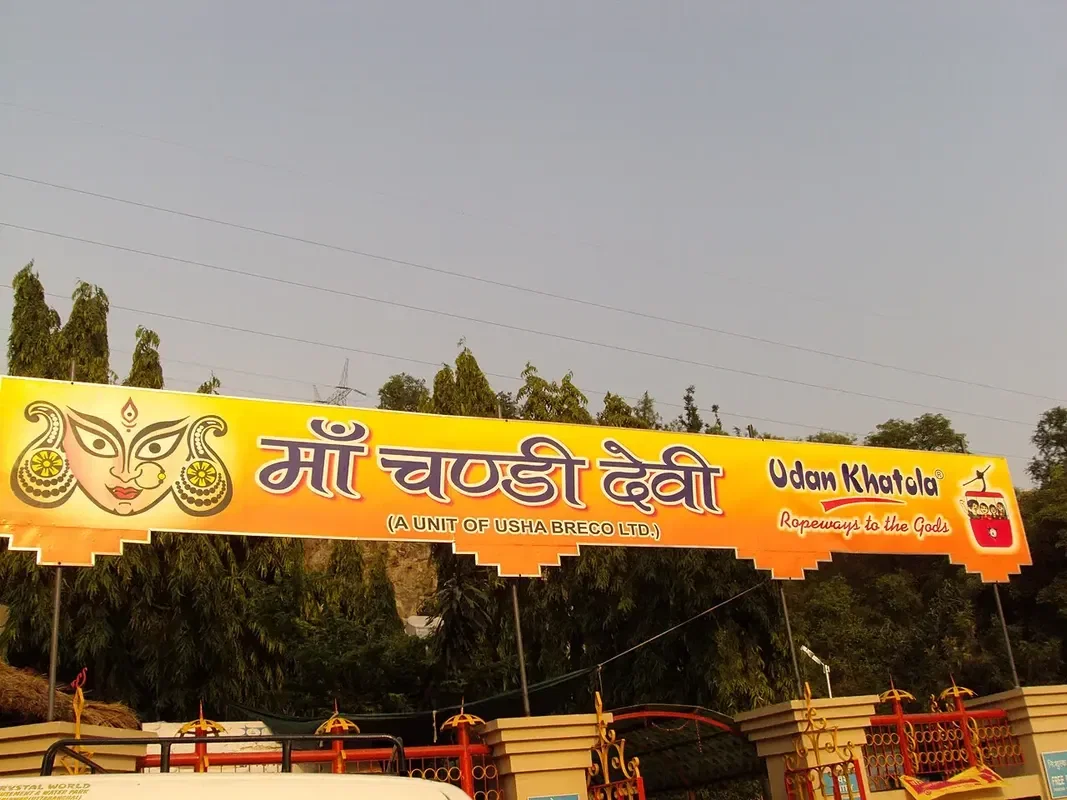
The temple follows a typical North Indian style and is topped by a traditional shikhara. It sits on the summit of Neel Parvat, the eastern peak of the Sivalik Hills, at a height of 884 metres above Haridwar. The present structure dates to 1929, when Suchat Singh, King of Kashmir, built it. Inside, devotees worship the murti of Goddess Chandi, believed to have been installed by Adi Shankaracharya in the 8th century CE.
Daily seva timings
Indicative — confirm on the temple's official site before visiting
Indicative — confirm on the temple's official site before visiting
Offerings & festivals
The main festival at the temple, drawing very large crowds.
A major day for the Goddess with large crowds.
Thousands of pilgrims climb to the temple during the Kumbh.
How to reach
Jolly Grant Airport, Dehradun, is the nearest airport, 41 km away.
Haridwar Railway Station is the nearest station, 4.3 km away.
Take the Udan Khatola ropeway from the lower station on Nazibabad Road near Gauri Shankar Temple (07:00–18:00; Mansa + Chandi combo ₹460 per adult).
A stepped trekking path of about 3 km climbs from Chandighat. The temple is 4 km from Har ki Pauri.
Frequently asked questionsFAQs
Yes, darshan is free. Only the Udan Khatola ropeway is paid; a combined Mansa Devi and Chandi Devi ticket costs ₹460 per adult.
More temples in UttarakhandMore in Uttarakhand
View all →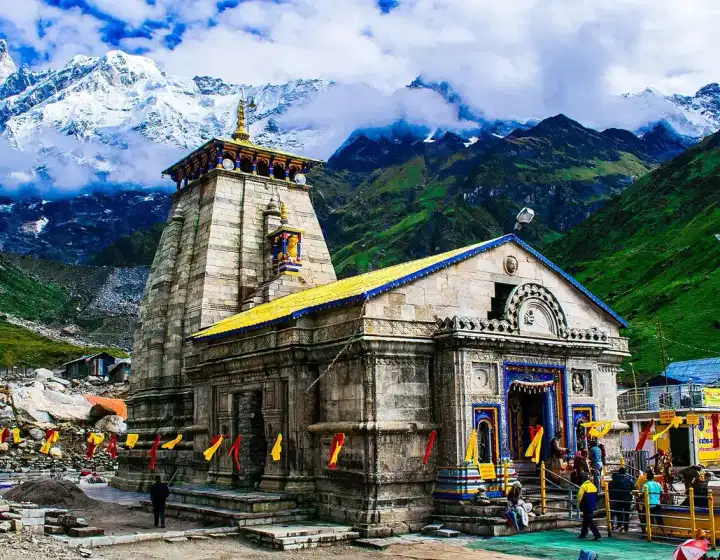
Kedarnath Temple
Kedarnath, UttarakhandKedarnath
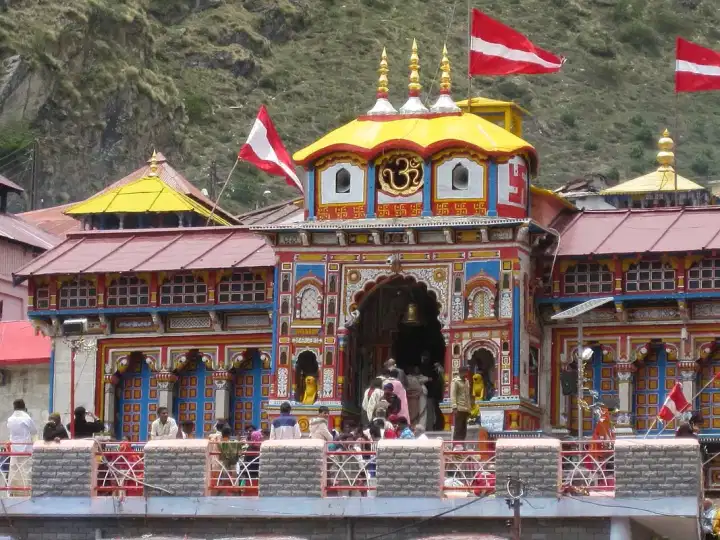
Shri Badrinath Temple
Badrinath, UttarakhandBadrinath
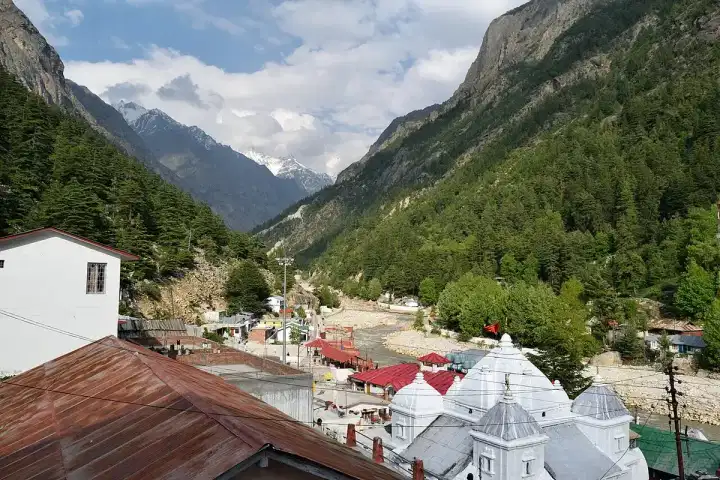
Gangotri Temple
Gangotri, UttarakhandGangotri
Yamunotri Temple
Yamunotri, UttarakhandYamunotri
Recommended Pujas
View all pujas →View allThis information is for awareness only. This temple is not a Vedamandir partner temple.