


Ekambareswarar Temple, Kanchipuram
The earth-element Pancha Bhoota Sthalam, home of the Prithvi Lingam and one of South India's tallest gopurams
Kanchipuram, Kanchipuram, Tamil Nadu

Daily 6:00 AM – 12:30 PM and 4:00 PM – 8:30 PM
- General (free) darshan
- Free
- Dress code
- Wear modest traditional clothes. Men can wear a dhoti or trousers with an upper cloth. Women can wear a saree, half-saree or churidar. Keep shoulders and knees covered.
- Best season
- -
About the temple
Ekambareswarar Temple in Kanchipuram, Tamil Nadu, is one of the great Shiva shrines of South India. Shiva is worshipped here as Ekambareswarar, also called Ekambaranathar, in the form of a Prithvi Lingam that represents the element of earth. This makes the temple one of the five Pancha Bhoota Sthalams. The goddess is honoured as Elavarkuzhali. There is no separate Parvati shrine inside, because local belief holds that Kamakshi of the nearby Kamakshi Amman Temple is the Lord's consort. The temple spreads over 23 acres and is among the largest in Kanchipuram. The Tamil Nadu HR&CE Department looks after it. Six poojas are offered every day, and general darshan is free.
Significance
Ekambareswarar means Lord of the Mango Tree. According to legend, Parvati did penance under a mango tree near the Vegavati river and worshipped a lingam she shaped from sand. When the river flooded, she held the lingam close to protect it. Moved by her love, Shiva appeared and married her. For this reason he is called Tazhuva Kuzhainthaar, the one who melted in her embrace. Because the lingam is made of earth, abhishekam is done only to its pedestal. The Tevaram saints sang of this shrine, and a Vishnu shrine inside the complex is counted among the 108 Divya Desams.
History
- 1c. 600 CE · First temple by the Pallavas
The shrine has stood since at least 600 CE. The Pallavas built the first temple here.
- 27th century · Sung in the Tevaram
The saints Sambandar, Appar and Sundarar sang hymns in praise of Ekambareswarar.
- 3Later Chola period · Rebuilt by the Cholas
The later Chola kings took down the Pallava structure and rebuilt the temple.
- 4Vijayanagara period · Thousand-pillar hall
The Vijayanagara kings built the Aayiram Kaal Mandapam, the hall of a thousand pillars.
- 5Krishnadevaraya's reign · Southern gopuram raised
Krishnadevaraya built the eleven-storied southern gopuram.
- 61532 CE · Achutaraya's gift
An inscription records King Achutaraya's gift of villages to the temple.
Architecture
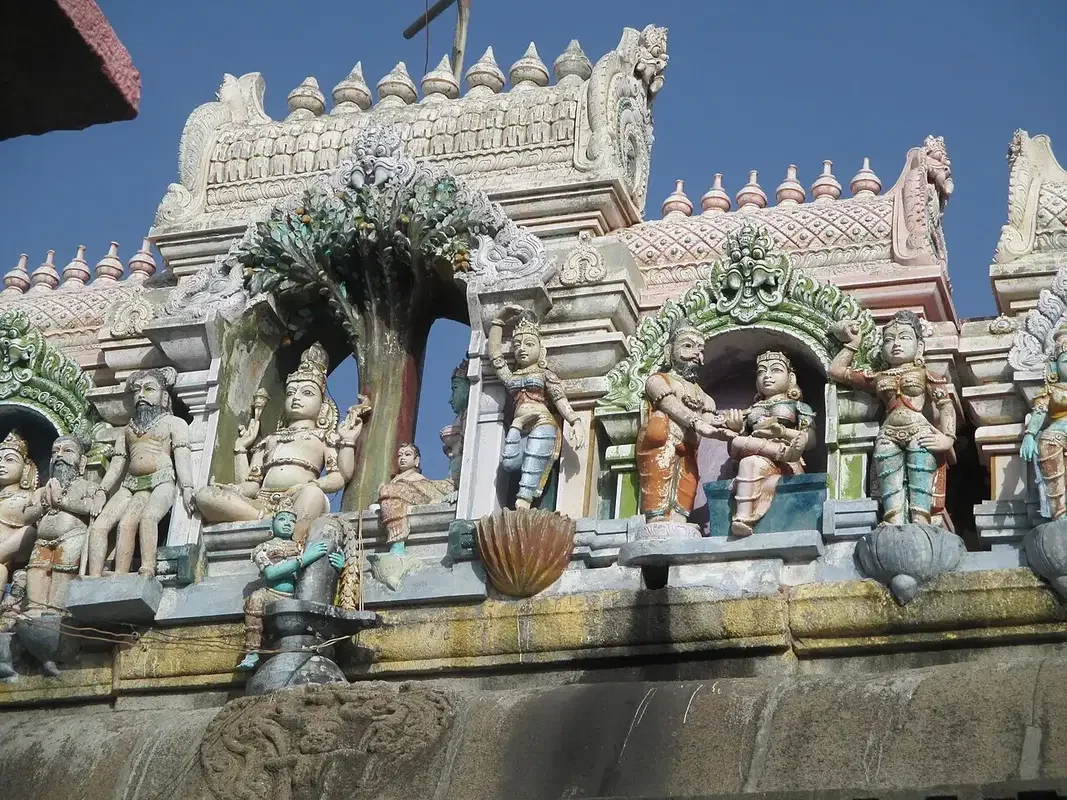
The temple is built in the Dravidian style and covers more than 23 acres. Its towering Raja gopuram has shrines of Vinayaka and Murugan at its base. Inside are the Vahana Mandapam, the Sarabesa (Navaratri) Mandapam and the Vijayanagara-era thousand-pillar hall. Granite images of the 63 Nayanmars line the first corridor, and a Sahasra Lingam carries 1,008 small lingams. The temple tree is an ancient mango whose four branches give four kinds of fruit.
Daily seva timings
As published on the temple's official site
As published on the temple's official site
Offerings & festivals
Ten days of processions on the silver Nandi and silver car, ending with the divine wedding
Regular fortnightly and monthly rituals for Lord Ekambareswarar
How to reach
The nearest airport is Chennai International Airport.
-
TNSTC buses run from Koyambedu, Chennai (78 km), Tambaram (70 km), Chengalpattu (45 km) and Vellore (102 km). The temple is 2 km from Kanchipuram bus stand.
-
Frequently asked questionsFAQs
Yes. General darshan is free for all devotees.
More temples in Tamil NaduMore in Tamil Nadu
View all →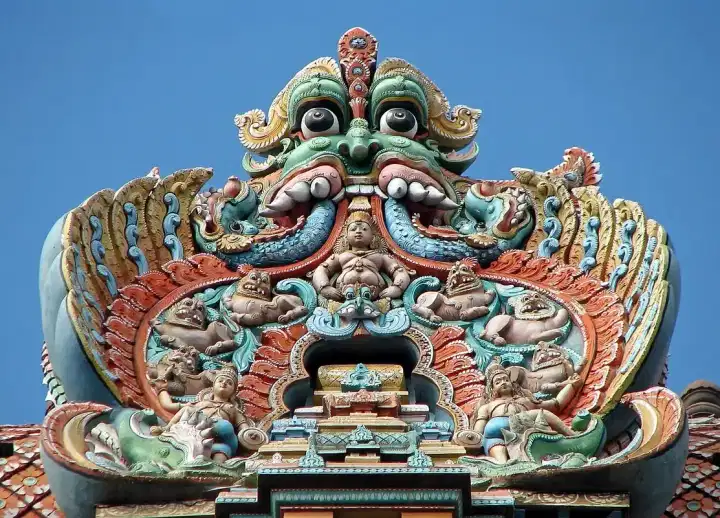
Meenakshi Sundareswarar Temple, Madurai
Madurai, Tamil NaduMadurai
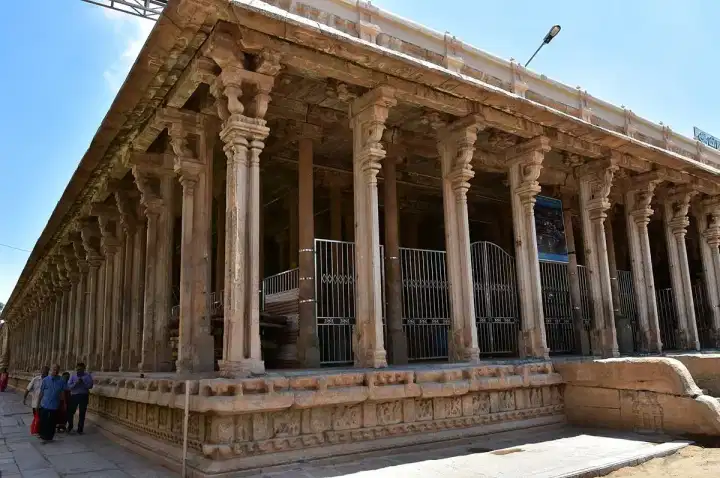
Srirangam Sri Ranganathaswamy Temple
Srirangam, Tamil NaduSrirangam
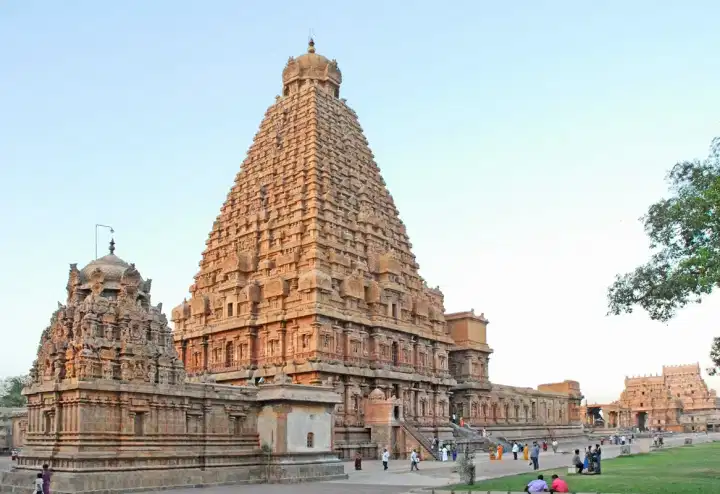
Brihadeeswarar Temple (Big Temple)
Thanjavur, Tamil NaduThanjavur
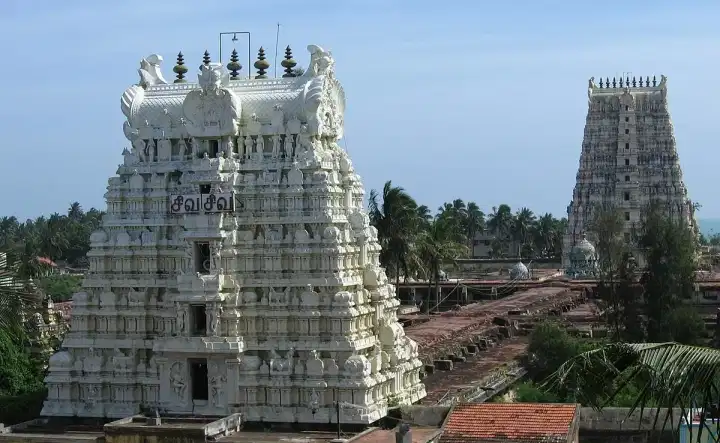
Rameswaram Ramanathaswamy Temple
Rameswaram, Tamil NaduRameswaram
Recommended Pujas
View all pujas →View allThis information is for awareness only. This temple is not a Vedamandir partner temple.