


Sarangapani Temple, Kumbakonam
A Divya Desam where Lord Aravamudhan came down in a chariot to wed Komalavalli, born from the Potramarai tank
Kumbakonam, Thanjavur, Tamil Nadu

Open daily · 07:00–12:30 and 17:00–21:00
- General (free) darshan
- Free
- Dress code
- -
- Best season
- -
About the temple
Sarangapani Temple is the largest Vishnu temple in Kumbakonam, in the Thanjavur district of Tamil Nadu. Lord Sarangapani, also called Aravamudhan, lies in a reclining pose with his head resting on his right hand. Goddess Komalavalli Thayar has her own shrine on the north side, parallel to the main sanctum. The name means 'the one with the bow in his hand', after Sharanga, the bow of Vishnu. The temple is a Divya Desam and one of the Pancharanga Kshetrams. Its 11-tier rajagopuram rises 53 metres, the tallest tower in the town. The sanctum itself is built as a chariot pulled by horses and elephants. The temple is run by the Hindu Religious and Charitable Endowments Department of Tamil Nadu.
Significance
The temple story begins with Sage Bhrigu, who kicked Vishnu on the chest and later begged forgiveness. Reborn as Sage Hemarishi, he did penance on the banks of the Potramarai tank, hoping to have Lakshmi as his daughter. She rose from the tank among a thousand lotuses and was named Komalavalli. Vishnu then came down from Vaikuntha as Aravamudhan in a chariot drawn by horses and elephants, and married her. An underground chamber in the temple recalls the time he stayed hidden as Pathala Srinivasa.
History
- 17th–8th century · Early Vaishnava site
The site may have been a Vaishnava settlement, revered in the Divya Prabandham.
- 210th–12th century · First inscriptions
The earliest inscriptions about the temple date from the late Chola period.
- 315th–17th century · Vijayanagara and Nayaka expansion
Vijayanagara and Nayaka rulers enlarged the temple; a Vaishnava matha became linked to it in the 17th century.
- 42007 · Chariots renovated
The temple's twin 300-tonne chariots were renovated.
- 513 July 2015 · Mahasamprokshanam
The consecration (kumbhabhishekam) was held with a large gathering of devotees.
Architecture
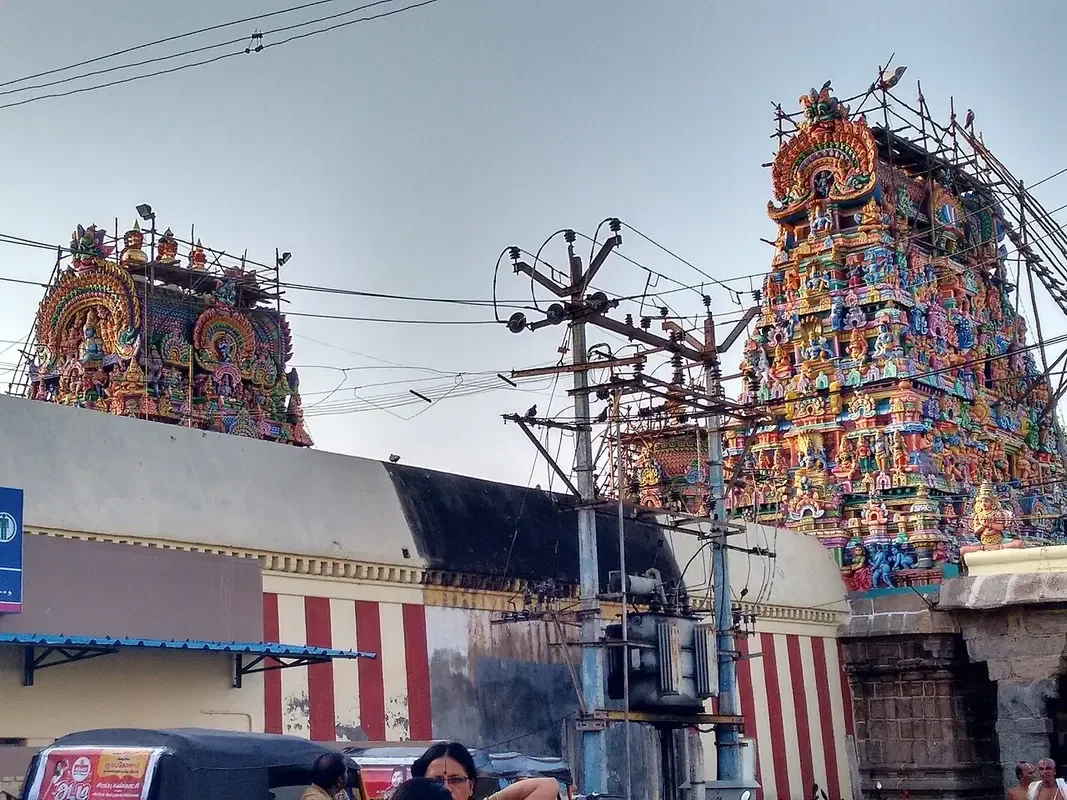
The east-facing temple sits within a huge wall, with the Potramarai tank outside its western entrance. Besides the 11-tier rajagopuram there are five smaller gopurams. A 100-pillared hall leads to the sanctum, built as a chariot pulled by horses and elephants, which marks it as a Karakkoil. Carvings of Bharatanatyam karanas line the walls, and two wooden processional chariots stand outside the main tower.
Daily seva timings
As published on the temple's official site
As published on the temple's official site
Offerings & festivals
The twin 300-tonne chariots are drawn around the temple streets.
The temple's second chariot procession of the year.
Held once in 12 years, when pilgrims bathe in Kumbakonam's sacred Mahamaham tank.
Yearly rite recalling how Aravamudhan performed the last rites of a devotee.
How to reach
Tiruchirappalli Airport is the nearest, 90–100 km away.
Kumbakonam railway station, about 2 km from the temple.
Buses and taxis run from Kumbakonam station. The temple is near Adi Kumbeswarar Temple.
-
Frequently asked questionsFAQs
Yes. General darshan at Sarangapani Temple is free.
More temples in Tamil NaduMore in Tamil Nadu
View all →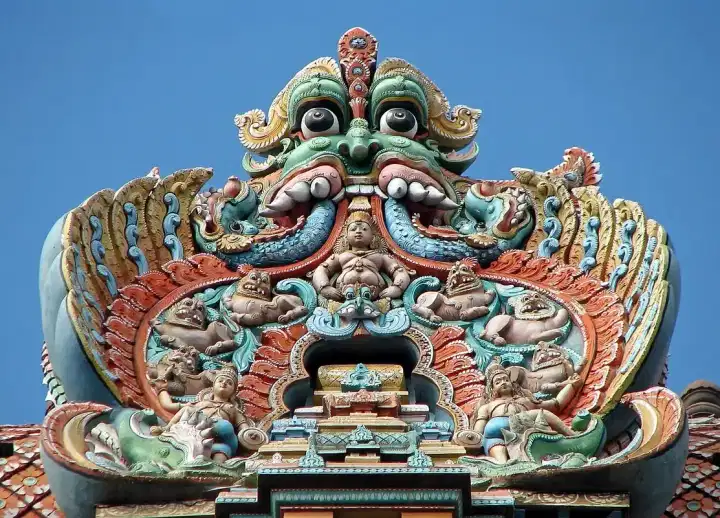
Meenakshi Sundareswarar Temple, Madurai
Madurai, Tamil NaduMadurai
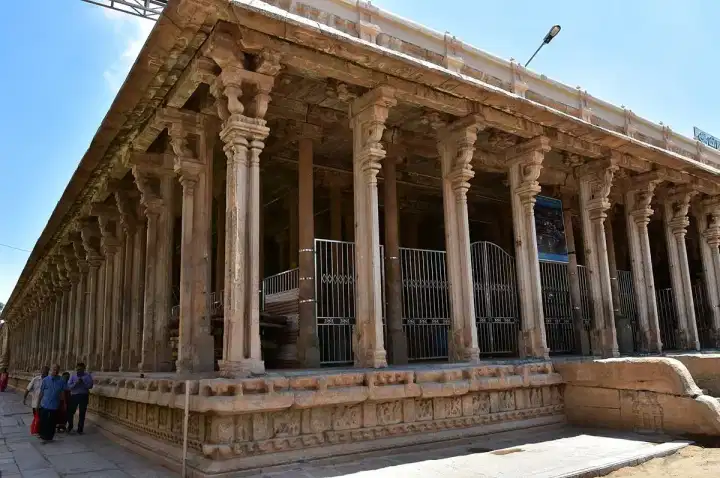
Srirangam Sri Ranganathaswamy Temple
Srirangam, Tamil NaduSrirangam
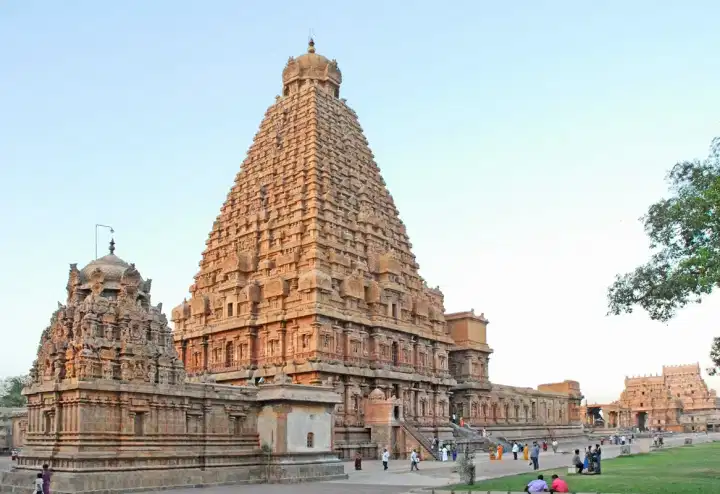
Brihadeeswarar Temple (Big Temple)
Thanjavur, Tamil NaduThanjavur
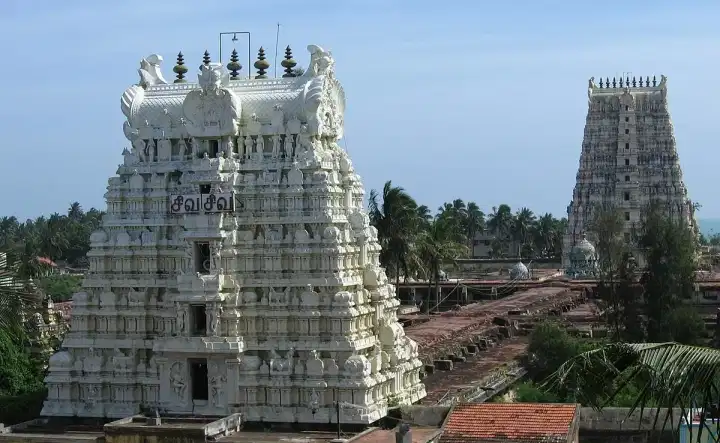
Rameswaram Ramanathaswamy Temple
Rameswaram, Tamil NaduRameswaram
Recommended Pujas
View all pujas →View allThis information is for awareness only. This temple is not a Vedamandir partner temple.